


A mysterious 12,000-year-old murder: this skeleton found in an excavation has a fatal wound
12,000-year-old skeleton in Vietnam shows signs of violent death and links to early hunter-gatherers, challenging theories on East Asian ancestry.
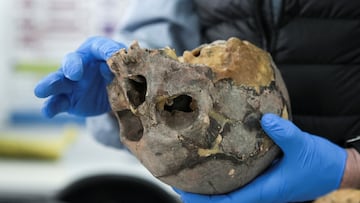
A study recently published in Proceedings of the Royal Society B: Biological Sciences might catch the attention of true crime fans, as researchers believe the skeletal remains provide evidence of “interpersonal violence.”
The research team examined a skull from modern-day Vietnam that is over 12,000 years old. The victim, estimated to be around 35 years old, had injuries that suggest a traumatic wound—possibly caused by a quartz artifact, according to the researchers.
For the authors, the injuries represent an early example of human-on-human violence, with the discovery made possible thanks to the exceptional preservation of the skeleton. The researchers believe that the tool led to an injury that caused an infection, which led to the eventual death of the 35-year-old who lived over 12,000 years ago. Additionally, when excavated, the authors write that he “appeared to have been placed in a foetal position, possibly tightly bound.”
What the skeletal remains tell researchers about the ancestors of East Asian populations
In addition to their breakthrough on interpersonal dynamics, the authors argue that their paper also sheds light on the ancestry of East Asian populations. There are two main theories about the origins of these populations, which the authors reject as “oversimplifications,” based on the genetic evidence they collected.
The skeletal remains analyzed—referred to as TBH1—were found in a cave in northern Vietnam, within the Tràng An World Heritage Site. Excavated over five years ago, the remains were well-preserved enough to be reconstructed, allowing the team to conduct cranial and mitochondrial tests to better understand where this individual fits into Southeast Asia’s ancestral record.
The mitochondrial tests linked TBH1 to an early indigenous group, differing from other samples found at archaeological sites that were determined to belong to farming communities, which carbon dating shows lived closer to our current time. TBH1 differs in that he “carried the M59 mitochondrial lineage [...] indicating that TBH1’s maternal lineage is affiliated with indigenous hunter–gatherer populations."
Related stories
Get your game on! Whether you’re into NFL touchdowns, NBA buzzer-beaters, world-class soccer goals, or MLB home runs, our app has it all.
Dive into live coverage, expert insights, breaking news, exclusive videos, and more – plus, stay updated on the latest in current affairs and entertainment. Download now for all-access coverage, right at your fingertips – anytime, anywhere.
Complete your personal details to comment