


A retiree has been parking in front of his house for 20 years and now his city council tells him he has to pay
The case of a retiree who loses his right to park in front of his house after 20 years of doing so: new urban planning regulations force him to pay.
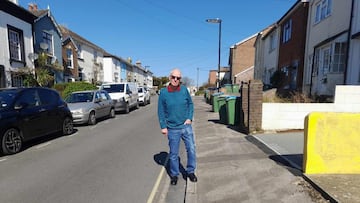

For two decades, a retired British man parked his car right in front of his house, in the driveway leading to his garage. He never imagined that something so routine—and seemingly logical—could become a problem. But after 20 years without a single warning or fine, the city council has decided to step in. The reason? The space in front of his home, though used daily by him, is technically public land. Now, authorities are demanding that he pay for having used it without permission.
The case, reported by the outlet Des Parking, has sparked a wave of reactions both in the local community and across the country. For many, it’s yet another example of excessive bureaucracy and how regulations can interfere with even the most ordinary aspects of daily life.
A habit that seemed harmless
The man at the center of the story, Bob Howes, lives in a single-family home with direct access from the street. Like anyone else might, he parked his car in the space connecting his property to the road. He wasn’t blocking traffic, bothering neighbors, or obstructing pedestrians—and in over 20 years, no one had ever complained. To him, it was simply a practical and logical use of space: parking in front of his garage, on the sidewalk that leads to it.
But recently, the city notified the retiree that this practice isn’t allowed without explicit authorization, since the entrance to his home is located on public land. Using it as a parking spot, they said, constitutes an “unauthorized occupation of public space,” which under local law must be regulated—and, if necessary, penalized.
In addition to the warning, he received a proposed fine for using the space without permission for so many years. On top of that, if he wants to continue parking there, he’ll need to apply for a special permit and pay a fee for occupying public space—similar to what’s required for restaurant terraces or commercial loading zones.
Local authorities insist this isn’t an arbitrary decision. According to the city, they’re simply enforcing a regulation that has been in place for years but hasn’t always been strictly monitored due to limited staffing or oversight.
Criticism over “lack of common sense”
The case has triggered strong public backlash. Many citizens see the city’s actions as lacking common sense. “How can they suddenly decide it’s wrong after 20 years?” asked users on social media. For some, it’s a clear example of how public administration can act disproportionately, ignoring context and everyday logic.
Several German media outlets have reported similar cases in other towns, where homeowners were fined for placing flower pots on the sidewalk or benches outside their doors—always with the argument that they were using “public space” without paying the required fees.
Legally, the city may be in the right. The space in front of the property, even though it leads to a private garage, is considered public domain, and its use for private purposes can be subject to regulation. Still, the case raises questions about whether rules should always be applied rigidly and without nuance. Urban planning experts interviewed by local media say these regulations exist to prevent abuse, but should be enforced with greater discretion. “It’s not just about applying the law—it’s about doing so proportionally and with regard to the circumstances,” they explained.
Now, the retiree is considering his options. He may appeal the fine, arguing that the city tacitly allowed the practice for 20 years, since it was visible and consistent and never challenged. Alternatively, he could apply for the permit and accept the cost if he wants to keep parking in the same spot.
Related stories
This case highlights an uncomfortable reality for many citizens: what seems normal can suddenly become a punishable offense. And sometimes, even a simple daily habit—like parking your car when you get home—can run up against the complex machinery of local government.
Get your game on! Whether you’re into NFL touchdowns, NBA buzzer-beaters, world-class soccer goals, or MLB home runs, our app has it all. Dive into live coverage, expert insights, breaking news, exclusive videos, and more – plus, stay updated on the latest in current affairs and entertainment. Download now for all-access coverage, right at your fingertips – anytime, anywhere.
Complete your personal details to comment