


Albert Einstein: “The world is in greater peril from those who tolerate or encourage evil than from those who actually commit it”
The German theoretical physicist, author of the theory of relativity, left behind a legacy of powerful quotations that remain highly relevant today.
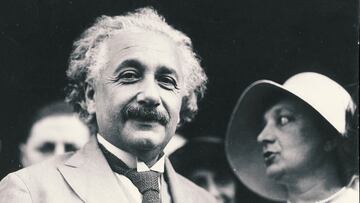

In an increasingly turbulent geopolitical world, marked by uncertainty over which territorial moves may come next to challenge other nations, one of Albert Einstein’s most remembered statements feels more timely than ever. The scientist, one of the most brilliant and cultivated minds of the twentieth century, described the world as “a dangerous place to live.” However, he did not place the blame on those who commit evil, but rather on those who do nothing about it.
The origin of these words appears to lie in a tribute Einstein dedicated to the cellist Pablo Casals in 1953, although it was not published until two years later. In essence, he stated that “the world is in greater peril from those who tolerate or encourage evil than from those who actually commit it.”
This phrase, later reinterpreted in The Harper Book of Quotations, Revised Edition, is understood as a reflection on individual moral and social responsibility. Evil is not embodied only by those who commit wrongful acts, but also by those who remain passive and unmoved in the face of injustice. This perspective strips away any claim of impartiality or neutrality in situations where aggression is inflicted by the powerful upon the vulnerable.
Einstein was an active pacifist and lived through one of the most brutal dictatorships in human history, Nazism. In fact, he believed that both the Holocaust and the atomic bombings of Hiroshima and Nagasaki occurred largely because of the passivity shown by citizens and governments in response to Nazi policies.
Einstein’s thinking has been echoed by other philosophers throughout history. Edmund Burke, the Anglo-Irish statesman, expressed a similar idea when he said that “the only thing necessary for the triumph of evil is for good men to do nothing.” Going even further back, Plato asserted that “the price good men pay for indifference to public affairs is to be ruled by evil men.”
Finally, Antonio Gramsci described indifference as “the dead weight of history.” As he emphasized, “what comes to pass does so not so much because a few people want it to happen, as because the mass of citizens abdicate their responsibility and let things be.”
Related stories
Get your game on! Whether you’re into NFL touchdowns, NBA buzzer-beaters, world-class soccer goals, or MLB home runs, our app has it all.
Dive into live coverage, expert insights, breaking news, exclusive videos, and more – plus, stay updated on the latest in current affairs and entertainment. Download now for all-access coverage, right at your fingertips – anytime, anywhere.
Complete your personal details to comment