


Alex Street, researcher, on the advantages of joining in song: “Singing is a cognitive, physical, emotional and social act”
Research is showing that singing along with other people can produce a number of health and healing benefits far beyond just being an enjoyable activity.

When the Grinch stole Christmas, he expected all the Whos down in Whoville to go “boo hoo hoo,” but instead they all came out to the town center and began to sing. The chorus of joyful voices brought about a profound change in him, causing his shriveled heart to grow three times in size.
The significant positive effect that singing can have is not just limited to fiction. Research is showing that singing can have wide-ranging benefits for those who participate in a singalong.
The benefits of joining in song
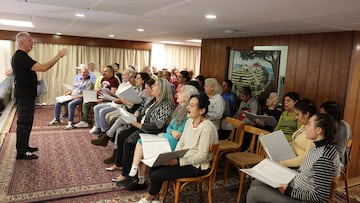
The act of singing, especially doing so with other people, has been shown to provide people with physical benefits beyond just feeling good like strengthening our immune system and suppressing pain. Researchers have observed that singing in a group also helps build a sense of connection and community, even among people who don’t know each other.
Alex Street, a researcher at the Cambridge Institute for Music Therapy Research explained to the BBC that “singing is a cognitive, physical, emotional and social act,” adding, “the ‘feel good’ responses become clear in the brighter sounding voices, facial expressions, and postures.”
Some of the benefits observed from joining in a song with other people include:
- Improved heart rate
- Improved blood pressure
- Improved immune response
- Improved general health
While the specifics behind this aren’t fully understood, the act of singing can be comparable to a brisk walk, with the controlled breathing in and out functioning like a workout for the heart and lungs. On top of that it releases endorphins, the ‘feel-good’ hormone the body produces which helps stave off pain and feel pleasure even when doing physical exertion.
Singing as a form of therapy
These days, singing is being used to help improve the lives of people dealing with varying health conditions and even repair certain physical damage suffered from ailments. “There’s a lot we’re discovering, particularly with rehabilitation from brain injury,” Street explained, who himself has been studying how music can be used as a form of therapy.
This is even the case with for people with significant injury from say a stroke. It is thought that singing improves neuroplasticity in the brain, the means by which new neurological networks are formed allowing for the brain to replaced damaged ones.
“It makes sense that we can benefit so much from it because singing has always played such an enormous role in connecting communities,” Street said. He emphasized that humans are programed from birth to respond positively to singing whether or not we grow up to be musically inclined.
“Lullabies are sung to children… We learn our times tables through chanting, and our ABCs through the rhythmic and melodic structure,” he explained. It’s even used to help console in times of grief, like at funerals.
Related stories
Get your game on! Whether you’re into NFL touchdowns, NBA buzzer-beaters, world-class soccer goals, or MLB home runs, our app has it all.
Dive into live coverage, expert insights, breaking news, exclusive videos, and more – plus, stay updated on the latest in current affairs and entertainment. Download now for all-access coverage, right at your fingertips – anytime, anywhere.
Complete your personal details to comment