


Aristotle, Greek philosopher: “The listener always empathizes with someone who speaks with emotion, even if they say nonsense”
This quote, cited by Jay Heinrichs in his book on self-persuasion, highlights the three key elements required to convince someone.
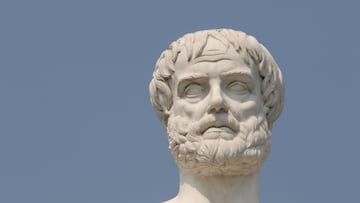
One of the most interesting ideas Aristotle introduced in his work ‘Rhetoric’ is the famous “Triangle of Persuasion.” The Greek philosopher, born and raised in the country that gave rise to future democracies and where the use of speech to achieve specific goals was most fully developed, believed that convincing someone required only three elements.
He identified them as logic (logos), credibility (ethos), and emotion (pathos). When these three pillars of communication are in perfect balance, Aristotle described the result as “the ideal of human communication.”
It is not simply about speaking well. It is about reaching the highest possible level of influence and, in doing so, achieving complete persuasion.
A well-known example of this balance, seen from a modern perspective, is the famous “I Have a Dream” speech by Martin Luther King Jr. In his case, he spoke with the credibility that came from being both a pastor and a civil rights leader. He conveyed powerful emotion through hope, the pain of segregation, and his dream for his children. The logical dimension came through his references to the Constitution, the Bible, and the principle of human equality. All of these elements formed an inseparable whole that, clearly, proved effective.
However, such balance is rare. Typically, one of the three components stands out more than the others.
Show yourself who’s in charge using the original art of persuasion, backed by contemporary pop culture examples that make transforming your habits and achieving goals easy!
— Crown Publishing (@CrownPublishing) July 5, 2025
Jay Heinrichs's ARISTOTLE'S GUIDE TO SELF-PERSUASION is out on 7/15!https://t.co/D3Q4E3G46P pic.twitter.com/qrwyxcmJUo
Emotion alters the listener’s judgment
The most powerful, arguably, is pathos. “The listener always empathizes with someone who speaks with emotion, even if they are talking nonsense,” the Greek thinker observed. “Our judgements when we are pleased and friendly are not the same as when we are pained and hostile,” he added. The wise philosopher was saying that emotion alters the listener’s judgment.
What happens to audiences when a speech centers primarily on emotion? We tend to assume that those feelings arise from truth, and our analytical capacity becomes clouded to the point that we may accept almost any claim.
If a speaker succeeds in making the audience share their fear or joy, their conclusions are validated by what the listeners feel rather than by logical reasoning. This is why, in politics, emotionally charged speeches can be so powerful even when their theoretical foundation is virtually nonexistent.
Related stories
Get closer to the game! Whether you like your soccer of the European variety or that on this side of the pond, our AS USA app has it all. Dive into live coverage, expert insights, breaking news, exclusive videos, and more. Plus, stay updated on NFL, NBA and all other big sports stories as well as the latest in current affairs and entertainment. Download now for all-access coverage, right at your fingertips – anytime, anywhere.
And there’s more: check out our TikTok and Instagram reels for bite-sized visual takes on all the biggest soccer news and insights.
Complete your personal details to comment