


Bad news for small grocery stores in the U.S. - cuts to funding for the SNAP program could shutter thousands of grocers
Local grocery stores are at risk of “face severe financial hardship” as a result of the SNAP cuts in President Trump’s “One Big Beautiful Bill”.
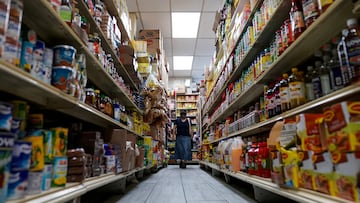

Throughout the United States, thousands of local grocery stores are believed to be under threat after Congress passed legislation that includes cuts to the Supplemental Nutrition Assistance Program (SNAP).
Signed into law by President Donald Trump on July 4, the so-called “One Big Beautiful Bill” is to significantly reduce federal funding of the food-stamps scheme.
A scheme that millions rely on
Worth an average of $187.20 per month per participant, SNAP benefited nearly 42 million people in America in 2024, per statistics published by the U.S. Department of Agriculture’s (USDA) Food and Nutrition Service.
SNAP access tightened
In addition to introducing SNAP funding cuts, which are slated to increase the cost burden on state administrations from 2028, this month’s Republican-backed legislation will make program eligibility harder to secure.
Most notably, the “One Big Beautiful Bill” includes provisions to expand the scheme’s work requirements and increase the frequency of eligibility reviews.
More than 20 million households impacted
According to calculations by the Urban Institute, a think tank that focuses on social and economic policy, just over 22 million families in the U.S. now stand to lose some or all of their SNAP benefits.
“Among these families, 5.3 million would lose at least $25 in SNAP benefits per month, and most of them would be working families and families with children,” the body says.
SNAP a “big piece of what we do”
If fewer households are able to spend SNAP stamps at the grocery stores that take part in the scheme, many local retailers are at risk of a crucial loss of income.
Indeed, according to analysis by the policy institute the Center for American Progress, over 27,000 businesses in more than 300 counties nationwide “face severe financial hardship” resulting from cuts to federal SNAP funding.
Speaking to CNN, the owner of a grocery store in Opelika, a city in Alabama with a population of around 30,000, has said the retailer’s involvement in the SNAP scheme is responsible for around a third of its sales.
Describing SNAP as a “big piece of what we do”, Jeffrey Wright, the owner of Wright’s Market, said: “We see very hardworking people who are using this program to try to feed their families and pay rent.”
He added that SNAP is a “great economic driver for our industry and the supply chain”.
How does SNAP benefit the economy?
Recent analysis conducted by the USDA’s Economic Research Service clearly backs up Wright’s statement.
Last updated this month, the ERS’s research has found that SNAP benefits can have a 1.54 multiplying effect on the U.S.’s economy.
“This means an increase of $1 billion in SNAP benefits increases the GDP [gross domestic product] by $1.54 billion,” the body says. “Additionally, the same increase supports 13,560 additional jobs.”
Related stories
Get your game on! Whether you’re into NFL touchdowns, NBA buzzer-beaters, world-class soccer goals, or MLB home runs, our app has it all.
Dive into live coverage, expert insights, breaking news, exclusive videos, and more – plus, stay updated on the latest in current affairs and entertainment. Download now for all-access coverage, right at your fingertips – anytime, anywhere.
Complete your personal details to comment