


Behind the legend of Black Bart: The rise and fall of the legendary stagecoach robber
Politeness and a touch of humor will get you a long way, and so it was with Black Bart, one of the most prolific stagecoach robbers of the Old Wild West.
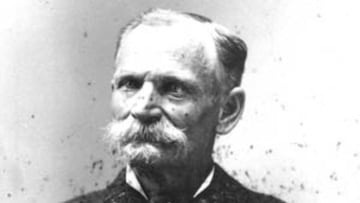

There are some truly fascinating figures from history, but those who chose to ‘break bad’ often capture our imagination more than others. The United States, for its part, does not lack at all in these usually colorful individuals given the history of how the nation was formed and grew.
There was an especial abundance of these personages during the period with the combination of the nation expanding westward, the post-Civil War period along with the gold rush. People that come to mind are Billy the Kid, Jesse James and Wild Bill Hickok, just to name a few. The unfortunate end of the last is used by someone dear as an excuse not to sit with their back to the door.
However, while these outlaws were more rough around the edges, there was one highwayman who earned the reputation of being a gentleman while carrying out his robberies eschewing profanity. Furthermore, he never fired a gun while holding up stagecoaches. He couldn’t, it was never loaded.
The ‘gentleman bandit’ of the gold rush in California was named Charles Boles, but he was better known as Black Bart. He was one of the most prolific stagecoach robbers, credited with 28 holdups between 1877 and 1883, and he was a poet as well.
The legend of Black Bart
Charles Earl Boles was born in Norfolk, England to John and Maria Bowles in 1829. His family emigrated to the United States when he was just two years old and settled in Jefferson County, New York. He made his first adventure to the West Coast in 1849 to take part in the California Gold Rush.
After a couple of attempts to strike it rich, he gave up and returned east for what could’ve been for good. He got married, settled down in Decatur, Illinois to farm and started a family. However, war broke out and he fought with the Union in the Civil War, taking part in the battle at Vicksburg and Sherman’s March to the Sea.
The experience made him restless and in 1867 he headed west again to prospect in Montana and Idaho, leaving his wife and children behind. Some incident occurred four years later which made the honest man break bad. What exactly is unknown, he only said in a letter to his wife that it was unpleasant, involved employees of the Wells, Fargo & Company and vowed revenge.
He stopped writing her after that and she thought he had died. However, he wasn’t dead. In July 1875, he robbed his first stagecoach in Calaveras County, California. One of the things that stood out about the crime was that he politely told the stage coach driver, “Please throw down the box,” shared Calavera History.
Sierra Community Access Channel shared a wonderful story of another reason behind how Black Bart got the moniker ‘the gentleman bandit’.
As the story goes, during one of his robberies, a lady on the stagecoach that was quite terrified held her purse out the window and dropped it for the thief. However, being the gentleman that he was, Boles walked over, picked it up and handed it back to her saying: “No thank you mam, I only rob Wells Fargo.”
During his fourth and fifth robberies, he left a humorous poem at each one, which became one of the signature things about his cappers and capture plenty of press. As for the name Black Bart, that came from the villain in a dime-novel called ‘The Case of Summerfield’ who robbed Wells Fargo stagecoaches. He signed both of his poems with that name.
However, the end of his highwayman days came in 1883, when he was shot during a robbery. While fleeing the scene of the crime he left behind a handkerchief which bore the mark of a laundry service. Wells Fargo Detectives James B. Hume and Henry Nicholson Morse scoured San Francisco, visiting nearly 90 laundries before they found the one where Boles had his done.
Boles was apprehended and confessed, under an alias, to the robberies he had committed prior to 1879, falsely thinking the statute of limitations had expired. However, among the items seized from his humble living quarters, police found his real name.
He was only prosecuted for one robbery, for which he was found guilty and sentenced to eight years. In the end he only served four due to good behavior. Upon his release, he told the assembled press that he was through with crime.
He finally wrote his wife again once out of prison, informing her that he was demoralized and could no longer take being followed by Wells Fargo agents, telling her that he just wanted to get away from everyone. The last time the gentleman bandit was seen was 28 February, 1888.
Related stories
Get your game on! Whether you’re into NFL touchdowns, NBA buzzer-beaters, world-class soccer goals, or MLB home runs, our app has it all.
Dive into live coverage, expert insights, breaking news, exclusive videos, and more – plus, stay updated on the latest in current affairs and entertainment. Download now for all-access coverage, right at your fingertips – anytime, anywhere.
Complete your personal details to comment