


China begins new $167 billion megaproject in Tibet that will make energy history
China begins building a mega dam in Tibet to boost renewables, sparking concerns from India and Bangladesh over downstream water impacts.
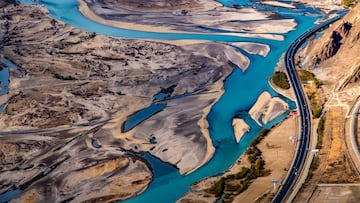

Ground has broken in Tibet on one of the world’s largest planned mega dams. The ambitious construction project, overseen by the Chinese government, aims to boost the country’s renewable energy capacity. However, neighboring countries, including India and Bangladesh, have raised concerns about the potential impact on their waterways.
According to German outlet DW, the hydroelectric dam will feature five cascades capable of generating around 300 billion kilowatt-hours of electricity annually—an amount the outlet notes is “equivalent to the energy consumed by the UK last year.”
The U.S. Energy Information Administration (EIA) reports that China currently generates about 37% of its electricity from hydroelectric, nuclear, and other renewable sources.
Water resources have long been a source of tension among India, China, Pakistan, and other countries in the region—especially as climate change alters water availability and concerns over scarcity grow. China’s Foreign Ministry has attempted to ease these concerns, stating in late 2024 that the new dam would have no “negative impacts” on downstream countries. Beijing also pledged to “maintain communication with countries at the lower reaches” of the river to help prevent conflict.
A little about the Yarlung Tsangpo River
The dam will be built along the Yarlung Tsangpo River in the Tibetan region and is expected to cost around 1.2 trillion yuan (approximately $167 billion). The Yarlung Tsangpo is the name for the upper reaches of the Brahmaputra River, which originates from the Angsi Glacier in western Tibet, southeast of Mount Kailash and Lake Manasarovar.
As it flows eastward through Tibet, the river forms the Yarlung Tsangpo Grand Canyon, which is the deepest canyon in the world. Upon entering Arunachal Pradesh in India, the river continues its course and becomes the Brahmaputra. Then, flowing into Bangladesh, it is called the Jamuna, before merging with the Ganges and emptying into the Bay of Bengal.
The nearest city to the dam site is Nyingchi, located just about 30 kilometers (18 miles) from the Indian border. The river’s high-altitude origin and steep descent through the Himalayas give it immense hydropower potential, making it an ideal site for hydroelectric development.
Related stories


The Brahmaputra River system already hosts several dams across China, India, Bhutan, and Bangladesh. China’s new project near Nyingchi is part of a broader plan to build a series of cascade dams along the river, with the current project expected to generate up to 60 gigawatts of electricity—potentially surpassing the output of the Three Gorges Dam.
Get your game on! Whether you’re into NFL touchdowns, NBA buzzer-beaters, world-class soccer goals, or MLB home runs, our app has it all. Dive into live coverage, expert insights, breaking news, exclusive videos, and more – plus, stay updated on the latest in current affairs and entertainment. Download now for all-access coverage, right at your fingertips – anytime, anywhere.
Complete your personal details to comment