


Coffee, watches and more: What products are getting pricier under Trump’s tariffs
The impact of Trump’s tariffs has been slow to be felt in the US economy but that changed with inflation data released for August. Here’s a look.
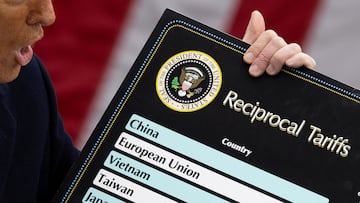

President Donald Trump announced his new tariff regime on 2 April, which he dubbed ‘Liberation Day’, from the White House Rose Garden. Along with a flat 10% levy on all imports into the United States, he slapped retaliatory import taxes on goods from nearly every nation.
The outsized tariffs caused consternation among businesses and the American public and shook the stock and bond markets. Economists warned that the new import levies would raise prices and slow US economic activity.
Trump relented a few weeks later, pausing the implementation of many of the reciprocal tariffs after investors began dumping US bonds. However, as of August many have now gone into effect and their impact on prices is finally starting to be felt.
Consumers starting to see price hikes from tariffs
The effect of Trump’s tariffs, which US companies must pay to receive goods they’ve ordered from abroad, took a while to filter through to the broader economy but are now pushing up prices. The Consumer Price Index ticked up in August, accelerating to 2.9% on an annual basis.
The delayed effect in the economy was due to some companies stocking up ahead of the taxes being implemented and others absorbing the tariff-related costs. However, now companies are seeing their bottom line take a hit and are being forced to pass those price increases onto customers says Beth Hammack, president and CEO of the Federal Reserve Bank of Cleveland speaking to CBS News.
Consumers will progressively see prices rise in the coming months with around two-thirds of the tariff-related costs being passed on to them according to Oxford Economics’ chief US economist, Ryan Sweet. He told CBS News: “You’ll have a few of these increases spread out with each passing month, and you’ll see more of the tariffs passed on to consumers.”
Which imported products are seeing the biggest increases
According to CPI data the CBS News reported that of the consumer goods that are heavily imported, the following items have seen some of the largest year-on-year price increases:
| Product | Increase compared to 2024 |
|---|---|
| Coffee | 21% |
| Audio equipment | 12% |
| Household furniture | 10% |
| Bananas | 6.6% |
| Women’s dresses | 6.2% |
| Watches | 5.6% |
| Motor vehicle parts | 3.4% |
Certain products just cannot be produced in the United States in quantities to met domestic demand, like coffee, which can only be grown in Hawaii and Puerto Rico. US consumers had already been seeing prices rise prior to the new round of tariffs but the tariffs are expected to drive them even higher as anticipatory stocks dwindle.
For example, imports from Brazil, which the US coffee industry relies on for nearly 31% of its beans, now face a 50% tariff.
Wedding dresses are another product that is primarily imported, with around 90% coming from China. In March, the owner of Radiant Bride in northeast Ohio told Cleveland’s CBS 19 News that in his opinion bringing production back to the US isn’t feasible and is misguided saying: “We don’t have the infrastructure for it. We don’t have the skill set for it.”
Related stories
Get your game on! Whether you’re into NFL touchdowns, NBA buzzer-beaters, world-class soccer goals, or MLB home runs, our app has it all.
Dive into live coverage, expert insights, breaking news, exclusive videos, and more – plus, stay updated on the latest in current affairs and entertainment. Download now for all-access coverage, right at your fingertips – anytime, anywhere.
Complete your personal details to comment