


Dangerous space weather: NASA to research how electrically-charged solar wind interacts with Earth’s magnetic field
NASA launches satellites to learn more about magnetic reconnection, which will help better predict geomagnetic storms.

On Wednesday, July 23, NASA, with the help of SpaceX, launched two satellites into orbit to study how the solar winds from the Sun impact our planet’s geomagnetic fields. The TRACER Satellites will, according to NASA, "help understand magnetic reconnection and its effects in Earth’s atmosphere." The phenomenon NASA is hoping to learn more about is called magnetic reconnection, which the agency explains “occurs when activity from the Sun interacts with Earth’s magnetic field.” Scientists hope that by learning more about the process, they "will be able to better understand and prepare for impacts of solar activity on Earth."
What is a geomagnetic storm?
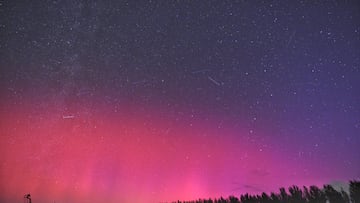
Geomagnetic storms, also known as solar storms, occur when solar winds exchange energy with the space surrounding the Earth. These solar winds bring radiation that penetrates the ionosphere and the other upper levels of the Earth’s atmosphere. More people may be familiar with the phenomenon known as auroras, or “northern lights,” caused by these events.
In addition to the technical effects, these storms can also have visible consequences. The northern and southern lights could be observed at unusual latitudes, a phenomenon that, although visually spectacular, is indicative of a strong disturbance in the Earth’s magnetosphere. Space agencies, including NOAA, are closely monitoring the evolution of these conditions to issue early warnings should they intensify.
What was the most powerful geomagnetic storm recorded?
The largest geomagnetic storm ever recorded occurred in 1859 and is known as The Carrington Event. The storm, which lasted two days, created auroras visible as far south as Colombia, Cuba, and Mexico.
The telecommunications infrastructure of the time, including telegraph systems in the United States and Europe, failed, and many operators tasked with sending messages reported being shocked. The total damage from this event would be around 2.6 trillion in today’s dollars.
Related stories
The 1980s also saw major storms, which in Canada led to major blackouts that forced trading within the stock market to be halted. In 2013, researchers investigated the events and found that the US energy system is vulnerable to these sorts of events. The report identified the corridor between Washington DC and New York City as the most susceptible to power outages caused by geomagnetic storms.
Get your game on! Whether you’re into NFL touchdowns, NBA buzzer-beaters, world-class soccer goals, or MLB home runs, our app has it all. Dive into live coverage, expert insights, breaking news, exclusive videos, and more – plus, stay updated on the latest in current affairs and entertainment. Download now for all-access coverage, right at your fingertips – anytime, anywhere.
Complete your personal details to comment