


Democratic Party division: These are the eight senators who voted to end the shutdown
Split in the Senate: Democrats cross party lines to end shutdown and secure back pay for government employees.
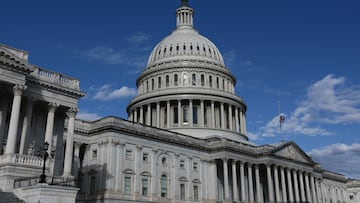

The federal government’s record-breaking shutdown is not over yet, but it has moved a significant step closer to its conclusion, largely thanks to eight Democratic senators.
The shutdown, now in its 41st day, began after Republicans and Democrats in Congress were unable to agree on a new federal funding bill by the end of September. GOP lawmakers, who do not have enough seats in the Senate to pass funding legislation without Democratic support, were unwilling to meet Democrats’ demands on healthcare spending.
On Sunday, however, a bill to reopen government gained the 60 votes it needed to advance beyond the debate stage in the Senate, after eight Democratic senators joined 52 Republicans in supporting the legislation.
The eight Democrats who voted to end the shudown, and why
These are the eight Democrats who broke rank, along with their explanations for why they voted to end the shutdown:
- Dick Durbin, Illinois: “This bill is not perfect, but it takes important steps to reduce the shutdown’s hurt. Not only would it fully fund SNAP for the year ahead, but it would reverse the mass firings the Trump Administration ordered throughout the shutdown.”
- Angus King, Maine: “It’s a win for those people that are so insistent ‒ that I’m hearing from all the time ‒ protect our health care. Our judgment is the best way to do that is to get a bill on the floor."
- Catherine Cortez Masto, Nevada: “I have consistently voted against shutting down the government because I know the pain it is causing working families, from TSA agents to government contractors.”
- Jacky Rosen, Nevada: “Unfortunately, it’s become clear as we go deeper in the second month of this Republican government shutdown that President Trump and Washington Republicans are weaponizing their power in alarming ways to inflict unimaginable pain and suffering on working people, like fully withholding SNAP benefits and gutting our tourism industry by grinding air travel to a halt.”
- Maggie Hassan, New Hampshire: “This agreement funds SNAP and food assistance programs, ensures that law enforcement, air traffic controllers, and other federal workers get paid, reverses the President’s recent reckless layoffs and prevents them from happening in the future, and, crucially, gives Congress a clear path forward to protecting people’s health care.”
- Jeanne Shaheen, New Hampshire: “I’ve made clear that my priorities are to both reopen government and extend the ACA enhanced premium tax credits. This is our best path toward accomplishing both of these goals.”
- John Fetterman, Pennsylvania: “I’m sorry to our military, SNAP recipients, gov workers, and Capitol Police who haven’t been paid in weeks. It should’ve never come to this. This was a failure.”
- Tim Kaine, Virginia: “This vote guarantees a vote to extend Affordable Care Act premium tax credits, which Republicans aren’t willing to do.”
These are the Democratic senators who voted AGAINST ACA subsidies. pic.twitter.com/XltzXnmG4q
— Winter (@WinterPolitics1) November 10, 2025
Next steps in Congress
Having met the Senate’s threshold to move to a final vote, the Continuing Appropriations Act now needs only a simple majority to pass the 100-seat chamber.
This weekend’s progress came after a group of centrist Democrats reached an agreement with Republicans to hold a vote later this year on extending the Affordable Care Act subsidies, which are set to expire at the end of 2025.
The Continuing Appropriations Act would reopen government until January 30, 2026, and provide back pay to federal workers. It must also pass the House of Representatives, where Republicans hold a slim majority. Reports indicate the bill would not be taken up by the House until Wednesday or Thursday at the earliest. If it passes Congress, it would then go to President Donald Trump to be signed into law.
The toll of the shutdown so far
So far, the shutdown has lasted six days longer than the U.S. government’s previous longest stoppage, which ran from December 2018 to January 2019. Around 670,000 federal workers have been furloughed, according to the Bipartisan Policy Center. An additional 730,000 deemed essential employees have had to continue working without pay.
Related stories
Get your game on! Whether you’re into NFL touchdowns, NBA buzzer-beaters, world-class soccer goals, or MLB home runs, our app has it all.
Dive into live coverage, expert insights, breaking news, exclusive videos, and more – plus, stay updated on the latest in current affairs and entertainment. Download now for all-access coverage, right at your fingertips – anytime, anywhere.
Complete your personal details to comment