


Discovery in the Earth’s core: casts doubt on the origin of much of the planet’s water
Scientists suggest that huge reserves of hydrogen inside the Earth may have been key in the formation of water.
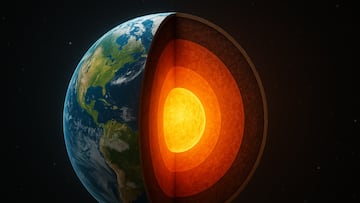
A recent study published in Nature Communications reveals that Earth’s core may contain enormous quantities of hydrogen, the lightest and most abundant element in the universe, trapped under extreme pressure and temperature conditions. This finding challenges long-standing theories about how water originated on our planet.
Researchers from Peking University and ETH Zurich recreated core-like conditions in the laboratory by subjecting small iron samples to pressures and temperatures similar to those found more than 1,800 miles beneath Earth’s surface.
Using atom probe tomography and diamond anvil cells, they were able to detect how hydrogen becomes incorporated into iron deep within the planet. According to the team’s estimates, Earth’s core could contain between 0.07 percent and 0.36 percent hydrogen by weight. That amount would equal roughly 9 to 45 times more hydrogen than is contained in all of Earth’s oceans combined.
The majority of hydrogen in Earth’s core is likely to have been incorporated during the planet’s formation, rather than through comet impacts, according to a study in Nature Communications. https://t.co/D8bRrx0iKl pic.twitter.com/OzIR83bsgo
— Nature Portfolio (@NaturePortfolio) February 12, 2026
What does this discovery mean?
The findings open the door to new explanations for the origin and abundance of Earth’s water, a mystery scientists have debated for decades. Traditionally, many researchers have believed that much of Earth’s water was delivered by meteorite or comet impacts during the planet’s early formation.
However, the discovery of such a vast hydrogen reservoir in the core suggests that water may have formed internally, as hydrogen combined with other elements during planetary accretion and internal differentiation.
The presence of hydrogen in the core could also help explain the relative scarcity of this element at Earth’s surface and provide new insight into the planet’s deep composition and long-term evolution. Although further studies are needed to confirm and expand upon these findings, the research represents a significant step forward in understanding the water cycle and the geochemical processes that have shaped our planet since its earliest beginnings.
Related stories
Get your game on! Whether you’re into NFL touchdowns, NBA buzzer-beaters, world-class soccer goals, or MLB home runs, our app has it all.
Dive into live coverage, expert insights, breaking news, exclusive videos, and more – plus, stay updated on the latest in current affairs and entertainment. Download now for all-access coverage, right at your fingertips – anytime, anywhere.
Complete your personal details to comment