


Divers descend into the depths of a lake and discover a historic shipwreck still standing: “Completely intact”
A Canadian dive team searching for a ship that sank in 1917, found a much older vessel - a two-masted schooner built in 1884.
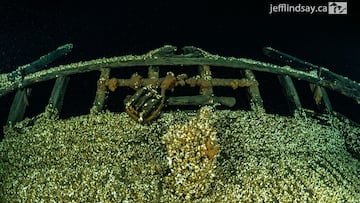
They say that if you go looking, you just might find something — and what happened in Canada feels straight out of an adventure story. The divers who stumbled upon this historic treasure needed a few minutes just to grasp what they were seeing. As one of them put it, “the joy was simply overwhelming.”
A Canadian dive team led by Heison Chak, president of the Ontario Underwater Council, had set out to locate the Rapid City, a two‑masted schooner built in 1884 that sank near Toronto in 1917. Instead, they found what they believe is an entirely different vessel — one that appears to be far older than the Rapid City itself.
Why so many large ships ended up at the bottom of Canada’s lakes
Across the Great Lakes — Ontario, Huron, Michigan, Erie, and Superior — experts estimate there are more than 6,000 shipwrecks dating back to the 1600s. These weren’t small boats, either. Many were massive freighters, passenger steamers, barges, and military vessels.
They went down for all kinds of reasons:
- Sudden, violent storms: The Great Lakes are notorious for fast‑moving squalls, shallow sandbars, and rocky shorelines that caused countless groundings and capsizings.
- Heavy maritime traffic: By the late 1700s and throughout the 1800s, trade routes between booming cities like Toronto, Chicago, and Duluth were packed, increasing the risk of collisions.
- Wartime losses: During the War of 1812 and other border conflicts, some ships were intentionally sunk or damaged.
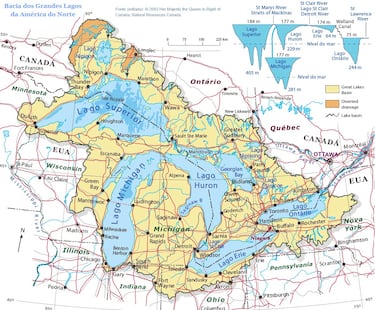
How these ships reached the Great Lakes in the first place
Massive vessels didn’t just appear in the Great Lakes — they arrived thanks to one of North America’s most ambitious engineering projects.
The St. Lawrence Seaway: A waterway that reshaped a continent.
Opened in 1959, the St. Lawrence Seaway connected the Atlantic Ocean to the Great Lakes through a network of canals, locks, and navigable rivers. It allowed ocean‑going ships up to 740 feet long and 78 feet wide to travel from Montreal all the way to the Great Lakes.
The system includes: 15 locks (13 in Canada, 2 in the U.S.); Major canals such as St. Lambert, Beauharnois, Snell, Eisenhower, and Iroquois. The Welland Canal, with eight locks that lift ships between Lake Ontario and Lake Erie.
In total, vessels climb more than 600 feet from sea level to the upper Great Lakes — roughly the height of a 60‑story building. These “Seawaymax” ships can carry up to 25,000 tons of cargo.
As settlement expanded and industrialization surged in the 19th century, trade routes between inland cities and the open ocean exploded. With that boom came a dramatic rise in maritime traffic — and, unfortunately, in accidents.
A new golden age of underwater discovery
Today’s technology has ushered in what many experts call a modern “golden age” of shipwreck hunting. Underwater drones, advanced rebreathers, high‑resolution sonar, and even unusually low water levels have helped reveal wrecks that remained hidden for centuries.
Now all that’s left is to determine the identity of this newly discovered vessel — and uncover the story it’s been keeping beneath the waves.
Related stories
Get your game on! Whether you’re into NFL touchdowns, NBA buzzer-beaters, world-class soccer goals, or MLB home runs, our app has it all.
Dive into live coverage, expert insights, breaking news, exclusive videos, and more – plus, stay updated on the latest in current affairs and entertainment. Download now for all-access coverage, right at your fingertips – anytime, anywhere.
Complete your personal details to comment