


Don’t miss the first supermoon and meteor shower of they year: When and where you can see the celestial events
There will be five supermoons in 2026 - the first to arrive is the Wolf Moon, which appears this weekend, coinciding with a spectacular meteor shower.
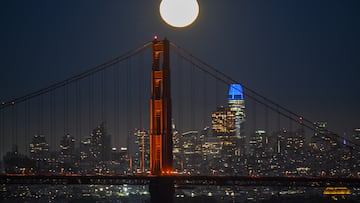
Get ready for a stunning year in the night sky. Like last year, there will be five supermoons to look forward to in 2026. And we won’t have to wait long for the first one.
The Wolf Moon arrives this weekend, the first full moon of the New Year - and it’s also supermoon, the last of four consecutive supermoons. A Supermoon happens when a full or new moon occurs at the point in its orbit where it’s closest to Earth. Because of that shorter distance, the moon appears 14% bigger and 30% brighter than usual.
The first Full Moon of the year will occur on January 3rd at 3:03 am. This is the Wolf Moon as howling wolves were frequently heard during this time of year. It will be a Supermoon as the moon’s position in its orbit is closer to Earth, making it look larger than average. #azwx pic.twitter.com/OrcxvQduZH
— NWS Flagstaff (@NWSFlagstaff) January 1, 2026
What time is the Wolf Moon 2026?
The first full moon of the year will be visible on Saturday, January 3, turning full at 5:03 a.m. ET, according to data from the National Geographic Institute. It will also appear bright and full on Friday (January 2) and Sunday (January 4). As of New Year’s Day, luminosity is currently 95.9 %, the full moon will reach maximum brightness (99.9 %) on Saturday morning. It will be the second-highest full moon of 2026.
Supermoon and meteor shower on the same night
By a stroke of luck (or maybe not), the January Wolf Moon coincides with a fiery meteor shower. The Quadrantid meteor shower will have a narrow peak, lasting around six hours between Saturday night into Sunday. The predicted peak is around 5 p.m. on Saturday January 3.
According to NASA, the best place to view this weekend’s Quadrantids is during the predawn hours on Sunday January 4. However, because this particular shooting stars show occurs on the same night as a full moon, it might be difficult to see as the light of the moon will interfere with the flashing fireballs.
To have the best chance of spotting a meteor, look for the point from where they originate - the Quadrantids start close to the Ursa Major constellation, which include the seven stars of the Big Dipper. Expect to see 1-10 meteors per hour. So find a dark spot, as far away from bright light sources, look to the northern skies and wait for the show to begin!
Related stories
Get your game on! Whether you’re into NFL touchdowns, NBA buzzer-beaters, world-class soccer goals, or MLB home runs, our app has it all.
Dive into live coverage, expert insights, breaking news, exclusive videos, and more – plus, stay updated on the latest in current affairs and entertainment. Download now for all-access coverage, right at your fingertips – anytime, anywhere.
Complete your personal details to comment