


Don’t miss this space spectacle this week: How and when to see the moon light up the Seven Sisters
If the skies are clear where you live, tomorrow night you’ll have the opportunity to witness the Moon pass in front of the Pleiades.
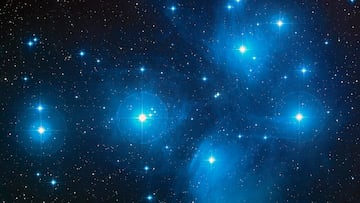

Stargazers across the United States will have another opportunity this Thursday to witness the Moon pass in front of the Pleiades, better known as the Seven Sisters. For roughly two hours the cluster of bright stars will disappear from view before reemerging on the other side of out neighboring satellite.
The last time it was visible in North America was July but will be occurring on a monthly basis until July 2029. However, the astronomical spectacle, known as the Moon-Pleiades occultation, won’t always be visible in the United States each time.
When should you look up to see the Pleiades occultation?
The spectacle will begin around midnight for those looking skyward on the East Coast. In the Chicago area it will begin a little before 10:30. And according to Space.com, in the Western part of the nation the event will start during the “during the early-to-mid evening hours” but will happen relatively low in the sky.
How to view the Moon passing in front of the Pleiades
The Moon will be a waning gibbous on Thursday night and will be 86% sunlit, states Space.com. This will make it difficult to see the stars as the Moon approaches them, but they should be more visible when they appear out of the dark crescent side of the Moon.
You’ll want a telescope with an eyepiece that has at least 50-power, notes the outlet. But you can also use binoculars, and best if you have them mounted on a tripod.
What are the Pleiades?
The Pleiades is a cluster of thousands of bright young stars, of which only six to seven are visible to the naked eye, thus the name Seven Sisters, located in the constellation of Taurus. They are relatively close to our solar system, only a mere 445 light years away, give or take.
The brightest stars are Alcyone, Atlas, Electra, Maia, Merope. Typically, most easily seen in the winter months, but can generally be seen in the sky between October and April.
They have been the source of myths and stories across cultures. Some of these portrayed them as sisters or maidens that were being pursued and who were placed in the heavens to protect them.
Related stories
Get your game on! Whether you’re into NFL touchdowns, NBA buzzer-beaters, world-class soccer goals, or MLB home runs, our app has it all.
Dive into live coverage, expert insights, breaking news, exclusive videos, and more – plus, stay updated on the latest in current affairs and entertainment. Download now for all-access coverage, right at your fingertips – anytime, anywhere.
Complete your personal details to comment