


Experts predict imminent eruption for one of the world’s most active Hawaiian volcanoes
Kīlauea may erupt between Aug 20–23, say USGS experts, after signs of deflation. Warnings issued for toxic gases near Hawai‘i Volcanoes National Park.
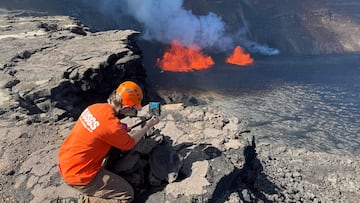
Kilauea is an active volcano located on the island of Hawaii, the island state’s largest island, from which it gets its name.
According to the US National Park Service (NPS), Kilauea is not only "the youngest and most active volcano on the island of Hawaiʻi," but "one of the busiest in the world."
The most recent eruption began on December 23, 2024, with the 30th episode of the event taking place on August 6, after which the volcano entered a period of repose. Here are some images from the 26th episode, which was recorded in late June.
Episode 26 lava fountaining at Kīlauea, Hawai'i, began at about 1:40 am on Friday, June 20. Check it out on the three Hawaiian Volcano Observatory streaming cameras, and happy Friday!
— USGS Volcanoes🌋 (@USGSVolcanoes) June 20, 2025
V1cam: https://t.co/NH3hBzZYqp
V2cam: https://t.co/0WxpKOLjXB
V3cam: https://t.co/BA0Ft1uIib pic.twitter.com/YkkljwxbPK
The latest forecast from USGS
Volcanologists at the US Geological Survey (USGS) estimate that volcanic activity could begin any time between August 20 and August 23, 2025. These estimates are based on “significant deflation” that has been recorded, which could indicate that an eruption is coming, as magma leaves the reservoir, where it has been collecting during a process known as inflation. The inflation and deflation of the volcano are tracked closely by volcanologists to forecast eruptions, which is a very challenging science.
“Overnight significant deflation was recorded across the summit of Kīlaua and models now show that episode 31 fountains are likely to start between August 20 and August 23,” reads the forecast.
Warnings have also been issued
The forecast also came with a warning for those in the area within and around the Hawai’i Volcanoes National Park. Currently, the eruption is taking place in an area that is closed off to protect guests from the gases being released, which include water vapor (H2O), carbon dioxide (CO2), and sulfur dioxide (SO2).
"As SO2 is continuously released from the summit during an eruption, it will react in the atmosphere to create the visible haze known as vog (volcanic smog) downwind of Kīlauea,“ warned USGS, adding that ”SO2 and vog may cause respiratory and other problems at high concentrations."
Related stories
Get your game on! Whether you’re into NFL touchdowns, NBA buzzer-beaters, world-class soccer goals, or MLB home runs, our app has it all.
Dive into live coverage, expert insights, breaking news, exclusive videos, and more – plus, stay updated on the latest in current affairs and entertainment. Download now for all-access coverage, right at your fingertips – anytime, anywhere.
Complete your personal details to comment