


Germany’s military makeover: What’s behind the country’s weapon spending and push for new recruits
Germany boosts defense spending to 3.5% of GDP under PM Merz, amending debt laws and strengthening ties with the U.S. amid global security shifts.
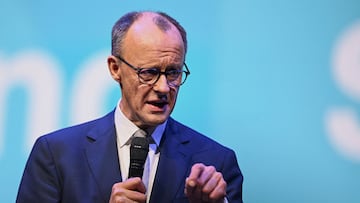
Germany’s new prime minister, Friedrich Merz, entered office shortly after U.S. President Donald Trump and has worked to stabilize the relationship between the two countries. Merz has championed initiatives in Europe to increase defense spending, supporting a law in the Bundestag, Germany’s parliament, that allows the country to take on debt to invest in rearmament and defensive technology. The new law amended the country’s constitution, which had imposed a “debt brake” limiting borrowing to 0.35% of GDP. However, the legal change now permits debt for military spending, provided it does not exceed 1% of GDP.
Though Merz has attempted to cozy up to Trump—particularly to ensure continued U.S. support for Ukraine—he has also warned the German public that the world has shifted and that they should not assume the U.S. will always meet their security needs. As the White House has made clear, it will not financially support the arming of Ukraine, countries including Germany have opted to purchase weapons from the U.S., which are then delivered to the war-torn country.
Just as he took office as chancellor, Merz addressed parliament, detailing his priorities, which included building up the country’s military.
“From now on, the federal government will provide the military with as much money as it needs to ensure it becomes Europe’s strongest armed force,” committed Merz, adding that, as the country with the largest economy and population, “nothing less should be expected from us.”
“Our partners not only expect this — they demand it.”
Germany increases military spending
To fulfill this commitment, the government has announced plans to spend approximately 3.5 percent of its GDP on the military, levels more in line with those of the United States. In recent decades, Germany, under the leadership of CDU member Angela Merkel and later Social Democrat Olaf Scholz, allocated closer to one or two percent of its GDP to defense. However, the full-scale Russian invasion of Ukraine has reshaped the security landscape in Europe and prompted Germany—once a major importer of Russian energy—to sever its economic and political ties with the Kremlin.
Related stories
Get your game on! Whether you’re into NFL touchdowns, NBA buzzer-beaters, world-class soccer goals, or MLB home runs, our app has it all.
Dive into live coverage, expert insights, breaking news, exclusive videos, and more – plus, stay updated on the latest in current affairs and entertainment. Download now for all-access coverage, right at your fingertips – anytime, anywhere.
Complete your personal details to comment