


Giant mirrors in space? Why astronomers are worried about this California-based startup’s idea for more daylight
A small company from California has plans to harness the power of the Sun, redirecting its light much like ancient humans did with water, sparking concern.
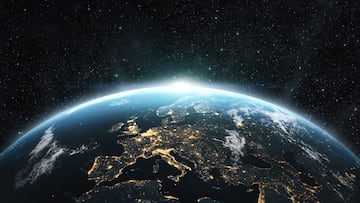

Solar energy is one of the cheapest ways to provide power, but it has one minor hitch, it only works when the Sun is shining. However, what if you could beam sunlight on the solar panels even after the sun goes down?
That is just what a small California-based start-up, Reflect Orbital, is proposing to do, saying it will tantamount to when humans learned to channel water for irrigation. It has plans to put a constellation of 4,000 giant mirrors into orbit around the Earth by 2030.
But astronomers and biodiversity experts are concerned about potential harms that false daylight could present.
Let there be light! From space mirrors
A spokesperson for the company told Space.com that the satellites would have a sun-synchronous orbit around the Earth following the boundary between day and night. The light from the giant mirrors, which could measure as much as 180 feet across, would produce “a soft, moonlike glow” in the area on the ground that is illuminated.
Reflect Orbital has applied for a license to test a demonstration satellite, called EARENDIL-1, next year with an expected launch date in April. “During the 2026 demonstration, observers at designated test sites will see the reflection as a bright moving star,” said the company.
Astronomers say extending daylight is “pretty catastrophic”
Space is becoming ever more cluttered with a growing number of satellites. The number has surged from around 2,000 in 2019 to 15,000 in 2025, and could reach roughly 560,000 by 2040.
Not only does the increasing number of satellites raise the risk of collisions between satellites, but also with the space debris floating around in low-Earth orbit, creating more hazards for spacecraft and space exploration. NASA says that there are twice as many known made-man objects that the agency can track as satellites currently in orbit around the planet.
But more dear to heart for astronomers is the light pollution that these giant mirrors will produce. This could make sky observations for telescopes here on Earth more difficult.
“The central goal of this project is to light up the sky and extend daylight and obviously, from an astronomical perspective, that’s pretty catastrophic,” said Robert Massey, Deputy Executive Director at the U.K.’s Royal Astronomical Society speaking to Space.com.
Furthermore, the extended daylight could also pose a threat to animal and human health.
“The beam reflected by these satellites is very intense, four times brighter than the full moon, and they will be flying multiple satellites in a formation. That will have an effect on wildlife in the directly illuminated area, but also, through atmospheric scattering, on the surrounding areas as well,” explained John Berentine, an astronomer at the Silverado Hills Observatory in Tucson Arizona and consultant at Dark Sky Consulting.
Reflect Orbital says that it is taking these concerns seriously and that the beam of light from their satellites is highly localized, covering just a few miles, and for a limited amount of time. Additionally, once the satellite has passed the target region, its mirror will be tilted away from the Earth’s surface.
Still Berentine warns that the space mirrors will be visible well beyond the areas that they are directly illuminating, over 60 miles away. They will appear like bright, fast moving stars that could confuse migratory birds as well as hamper astronomical observations.
Related stories
Get your game on! Whether you’re into NFL touchdowns, NBA buzzer-beaters, world-class soccer goals, or MLB home runs, our app has it all.
Dive into live coverage, expert insights, breaking news, exclusive videos, and more – plus, stay updated on the latest in current affairs and entertainment. Download now for all-access coverage, right at your fingertips – anytime, anywhere.
Complete your personal details to comment