


Green light given for the reopening of the world’s largest nuclear power plant
After a multi-billion-dollar upgrade process, Japan’s Kashiwazaki-Kariwa nuclear power plant is scheduled to restart in January.

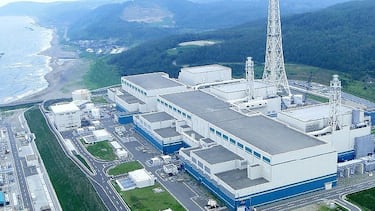
The world’s largest nuclear power plant, Japan’s Kashiwazaki-Kariwa facility, is preparing to fire up its reactors again. Located in the coastal towns of Kashiwazaki and Kariwa along the Sea of Japan in Niigata Prefecture, the complex sits about 140 miles northwest of Tokyo.
It is the largest nuclear plant on the planet by installed capacity, with seven units spread across roughly 1.6 square miles. And like every nuclear facility in Japan, it operates under the long shadow of Fukushima. Unit 1 began commercial operation in September 1985, with the remaining units coming online between 1990 and 1997.
Despite experiencing two major earthquakes in its vicinity, the plant itself escaped damage. The July 2007 Chūetsu quake - a magnitude 6.6 event with an epicenter only around 10 miles away - forced the complex into a full shutdown for 21 months while seismic protections were strengthened; Unit 7 became the first to restart in May 2009. The March 2011 earthquake and tsunami that triggered the Fukushima disaster also prompted a precautionary shutdown of all units at Kashiwazaki-Kariwa, even though the plant suffered no direct damage, so the facility could meet new safety standards.
Back to work
In December 2023, Japan’s Nuclear Regulation Authority (NRA) authorized the refueling of the reactors, citing improvements in management and safety protocols. This year, TEPCO focused on bringing Units 6 and 7 back online, completing the fuel loading for Unit 6 in June.
In December 2025, the Niigata Prefectural Assembly approved the restart, giving Governor Hanazumi the green light to move forward. With that, the full return to operation is now expected as early as January 2026. This would mark the first TEPCO (Tokyo Electric Power Company) reactor to resume operations since the Fukushima accident.
For now, the restart remains controversial. Around 300 local residents have staged protests, and surveys show roughly 60% of the prefecture’s population remains concerned about safety. The government points to the extensive seismic‑resilience upgrades implemented after the 2007 quake, when the International Atomic Energy Agency carried out several missions (2007-2008) to review the plant’s vulnerabilities and strengthen anti‑seismic measures - work that influenced the creation of new global seismic safety standards.
TEPCO has invested several billion dollars in upgrades, including a 15‑meter (49‑foot) protective seawall, improved backup systems, filtered ventilation, and expanded evacuation protocols. Regional officials have also demanded clearer communication, full‑scale evacuation drills, and the construction of new access routes as conditions for allowing the plant to restart in 2026.
Before the March 2011 Fukushima disaster, Japan’s 54 reactors supplied about 30% of the country’s electricity. All were shut down in its aftermath pending sweeping regulatory reforms. As of today, 14 of Japan’s 33 operable reactors have restarted, and 11 more are in the approval pipeline.
Related stories


Get your game on! Whether you’re into NFL touchdowns, NBA buzzer-beaters, world-class soccer goals, or MLB home runs, our app has it all.
Dive into live coverage, expert insights, breaking news, exclusive videos, and more – plus, stay updated on the latest in current affairs and entertainment. Download now for all-access coverage, right at your fingertips – anytime, anywhere.
Complete your personal details to comment