


Green light given to the mission 23,000 feet deep in search of strange life forms without sunlight
China and Chile join forces on a three-month mission to study the depths of the Atacama Trench.
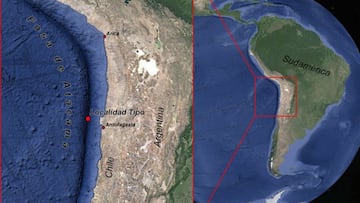
The Chinese Academy of Sciences (CAS) and Chile’s University of Concepción have joined forces on a three-month project to explore the depths of the Atacama Trench, located about 435 miles offshore, in search of life that exists without sunlight. The mission will be carried out aboard the Chinese research vessel Tan Suo Yi Hao, which set sail on Monday, January 19.
The goal is to investigate the geological triggers of tsunamis and earthquakes, as well as unusual life forms that survive without sunlight and could hold the key to the next generation of medical advances and their many applications.
This deep-sea mission is the largest ever conducted in the region and represents the culmination of a multi-year partnership that grants Chilean scientists exclusive access to China’s most advanced technology, allowing them to descend to the ocean floor in the most literal sense.
“An alliance formed years before which allows Chilean scientists to use tools that no other country currently possesses, accelerating years of research in only one mission,” the university said, according to the South China Morning Post.
What the mission is looking for
The Atacama Trench, stretching over 3,700 miles in length and reaching depths of more than 26,000 feet, is a place of extremes. Here, the Nazca and South American tectonic plates collide in slow motion, generating some of the most powerful earthquakes on Earth.
To reach these seemingly impossible depths, the crew will deploy the Fendouzhe (Striver), one of the most advanced crewed submersibles ever built, capable of diving beyond 32,800 feet. Inside its reinforced hull, three people will descend into a world of complete darkness. Using robotic arms, they will collect samples of so-called chemosynthetic life, organisms that do not rely on sunlight but instead draw energy from the Earth’s own chemical processes.
What's it like inside China's deep-sea manned submersible Fendouzhe (Striver), the world's first to reach the 'Fourth Pole of the Earth'? #Hainanvisit pic.twitter.com/RGLe3NN0rs
— China Daily Asia (@ChinaDailyAsia) July 9, 2024
Backed by the United Nations, the mission will focus on three main areas: climate research, disaster prevention, and the study of life that exists under extreme conditions. It will involve 33 research stations and nearly 20 submersible dives to probe the depths of the trench.
Related stories

Get your game on! Whether you’re into NFL touchdowns, NBA buzzer-beaters, world-class soccer goals, or MLB home runs, our app has it all.
Dive into live coverage, expert insights, breaking news, exclusive videos, and more – plus, stay updated on the latest in current affairs and entertainment. Download now for all-access coverage, right at your fingertips – anytime, anywhere.
Complete your personal details to comment