


He presented what he claimed was an archaeological find and ended up sentenced to prison and fined $4,400
The scammer bought secondhand items on eBay and presented them to museums as genuine archaeological finds from Roman sites.
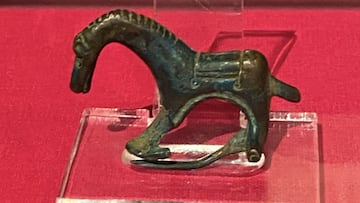
Jason Price, a British treasure hunter, was convicted in the United Kingdom for presenting several objects purchased online as “archaeological discoveries.” According to British authorities, Price submitted coins, metal figurines, and other artifacts, claiming they came from Roman hoards uncovered in Long Bennington, an area that does contain real archaeological remains.
Alarm bells rang over a Roman brooch known as the Leasingham Horse Brooch, which was displayed in a British museum and fueled the interest of visitors and archaeologists for months. The object was officially recorded in 2019 as a significant find in Leasingham and even led to changes in some interpretations about the presence of this type of artifact in Britain. Its exhibition cost the museum €5,700, intended to boost public interest in what was described as an exceptional discovery.
Some time after the museum acquired the brooch, an investigation exposed the deception. Authorities determined that Price had bought the item online through the eBay marketplace and had buried it himself to stage its discovery. The remaining coins, figurines, and artifacts he presented were also purchased online, after experts concluded that the materials were modern. The items initially went unnoticed because they had been treated with an artificial patina to give them an aged appearance.
Did you see last night’s #GreatBritishHistoryHunters episode on #More4 @4Viewers @Channel4? The Collection Museum made a feature and uncovered an incredibly rare object we have acquired for the museum collection–The 'Leasingham Horse' Brooch.
— Lincoln Museum and Usher Gallery (@lincmuseumusher) May 12, 2022
Watch here: https://t.co/MoubsKhfHR pic.twitter.com/Cxuv0QNgTh
Prison sentence
The investigation into Price’s objects began after some of the coins he claimed were authentic failed to match the known Roman sites in the area. The pieces did not fit what would be expected from a genuine Roman assemblage. The inquiry expanded to include the rest of Price’s submissions, and police ultimately uncovered the fraud.
This practice is not new. In the field, burying modern objects to simulate discoveries and gain notoriety or financial benefits is known as “seeding.” Archaeologists had hoped that Price’s brooch would generate significant interest among the public and museums, helping to finance a full excavation of the area. Once it became clear that the object had no connection to the local sites, those plans were abandoned.
For the offenses of forgery and deception, the Lincoln Crown Court found Price guilty on four counts of fraud by false representation. He was sentenced to 12 months in prison, suspended for two years.
In addition, he must complete 150 hours of community service in the area and pay roughly $4,400 (£3,250 ) in compensation as well as about $1,345 (£1,000) in costs.
Related stories
Get your game on! Whether you’re into NFL touchdowns, NBA buzzer-beaters, world-class soccer goals, or MLB home runs, our app has it all.
Dive into live coverage, expert insights, breaking news, exclusive videos, and more – plus, stay updated on the latest in current affairs and entertainment. Download now for all-access coverage, right at your fingertips – anytime, anywhere.
Complete your personal details to comment