


Historic Roman find: Archaeologists stumble upon the first tangible work of one of the greatest architects of all time
The remains found in Fano are finally from the basilica of Virtuvio, the only work attributable to the famous architect of Julius Caesar.
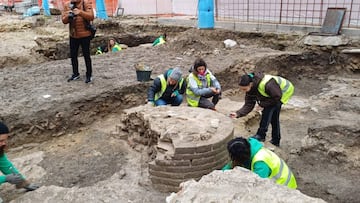
The historic center of Fano, a coastal city in Italy, has suddenly become the focus of a major breakthrough in the worlds of history and archaeology.
Three years after excavations began beneath Andrea Costa Square, Italian cultural authorities have confirmed that the ruins uncovered there belong to the legendary basilica designed by Marcus Vitruvius Pollio in 19 B.C. It is the first — and so far the only — building that can be definitively attributed to the author of De Architectura, the foundational treatise that shaped Western architecture.
Con la scoperta dei resti della Basilica descritta da Vitruvio nel 'De Architectura', Fano entra ufficialmente nella storia.
— Ministero della Cultura (@MiC_Italia) January 23, 2026
L'intervista a Ilaria Rossetti, archeologa della Soprintendenza Archeologia, Belle Arti E Paesaggio per le Province di Ancona e Pesaro e Urbino. pic.twitter.com/UQpY8bJhd8
Historic civic building unearthed
The announcement was made at the Montanari Media Library during an official briefing that brought together local and national leaders. With this confirmation, centuries of academic debate come to an end.
A structure known only from ancient texts has now become a physical reality, complete with a confirmed location, layout, and architectural footprint.
According to experts, the identification hinges on an exact match between Vitruvius’s written description and what archaeologists uncovered underground. The basilica features a symmetrical floor plan surrounded by a peristyle of columns, with eight long sides and four short ones — precisely as Vitruvius described in Book V of De Architectura. A recent survey even pinpointed a key corner column, allowing researchers to confirm the building’s orientation and full dimensions.
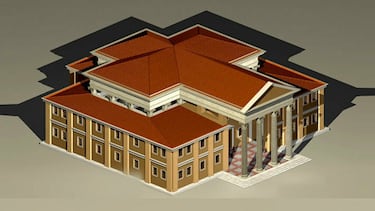
Columns in Fano confirm the structure as Vitruvius’s basilica
The columns discovered at the site measure roughly five Roman feet in diameter — about five feet across — and are estimated to have stood nearly 50 feet tall. They were attached to pilasters designed to support an upper floor, indicating that this was a monumental public building used for civic and administrative functions. Archaeologists emphasize that the proportions and measurements align with Vitruvius’s text with remarkable precision.
This milestone caps a process that began in 2022, when nearby excavations revealed massive walls and marble flooring — clear signs of a high‑status public district in ancient Fanum Fortunae. The latest digs, part of a broader urban redevelopment project, have finally connected all those scattered clues. From here, researchers will focus on studying the basilica’s full surroundings and determining how best to preserve and eventually showcase the ruins to the public.
The discovery doesn’t just rewrite part of Fano’s history. For the first time, it provides a physical reference point for understanding how one of the most influential architects of all time translated his ideas into real‑world construction.
Related stories
Get your game on! Whether you’re into NFL touchdowns, NBA buzzer-beaters, world-class soccer goals, or MLB home runs, our app has it all.
Dive into live coverage, expert insights, breaking news, exclusive videos, and more – plus, stay updated on the latest in current affairs and entertainment. Download now for all-access coverage, right at your fingertips – anytime, anywhere.
Complete your personal details to comment