


How Iran’s ‘wind traps’ work: capable of naturally cooling buildings
Persian badgir, or wind towers, are an ancient technology that could inspire the sustainable cities of the future.
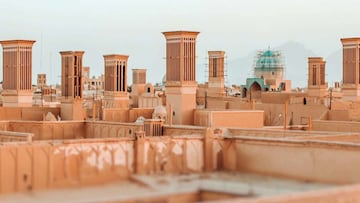
Amid ongoing global discussions about how to cool increasingly hot cities, a forgotten lesson from traditional Iranian architecture is reemerging: the badgir, or wind tower. This passive cooling system has been used for more than 2,500 years in desert regions such as Yazd.
These structures, which resemble tall chimneys rising above adobe homes, have not only endured over time. Today, they are drawing renewed interest on a planet facing extreme temperatures and heavy reliance on electrical cooling systems.
Wind towers work by channeling airflow into buildings while expelling hot air through natural pressure differences. In many cases, the cooling effect is enhanced as the air passes over underground water reservoirs, known as qanats. The result is a passive air conditioning system that once cooled homes, markets, and storage spaces without using any energy. This technique allowed desert communities to live in relative comfort during summers that often exceed 104°F.
The Iranian city of Yazd still preserves more than 700 wind towers, some dating back to the 14th century, although the concept itself is much older. There, these towers not only cooled homes but also supported the prosperity of a city that became a key stop along the Silk Road, thanks to its ability to make a harsh environment livable.
Far from being relics, wind towers have regained the attention of modern urban planners and architects. They demonstrate that sustainability does not always depend on complex or high-tech solutions. The tallest tower, standing 108 feet high, still operates without electricity and produces no emissions. Experts in bioclimatic design highlight their simplicity and effectiveness, challenging the idea that sustainable architecture must be expensive or technologically advanced.
This perspective has inspired modern projects in places like Masdar City in the United Arab Emirates, where buildings designed for COP28 incorporate natural ventilation based on similar principles. Even iconic complexes such as the Eastgate Centre in Harare have drawn on comparable ideas, using natural airflow systems inspired by termite mounds, which closely resemble the concept behind wind towers.
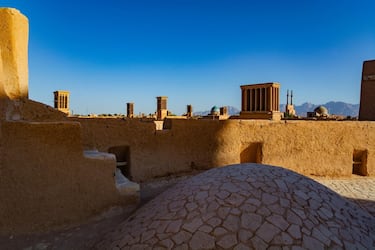
What to do about extreme heat
At a time when Europe and the Americas are debating how to adapt cities to extreme heat, some architects and academics are proposing a return to technologies like Iranian wind towers and their integration into contemporary design. Examples include naturally ventilated skyscrapers, neighborhoods designed to generate airflow, and public spaces that provide cooling without energy consumption.
Experts cited by international media emphasize that such systems could reduce dependence on air conditioning, whose widespread use increases electricity demand and emissions during heat waves. Persian architecture shows that entire cities were cooled for centuries by working with the climate rather than fighting against it.
Related stories
Get closer to the game! Whether you like your soccer of the European variety or that on this side of the pond, our AS USA app has it all. Dive into live coverage, expert insights, breaking news, exclusive videos, and more. Plus, stay updated on NFL, NBA and all other big sports stories as well as the latest in current affairs and entertainment. Download now for all-access coverage, right at your fingertips – anytime, anywhere.
And there’s more: check out our TikTok and Instagram reels for bite-sized visual takes on all the biggest soccer news and insights.
Complete your personal details to comment