


How much time is left before the oil runs out?
Oil doesn't run out all at once: it runs out country by country. Some have decades of reserves, others just a few years. The clock is ticking silently, and the unsettling thing isn't how many barrels are left, but who will run out first.
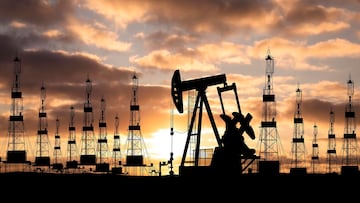
Oil has always been surrounded by myths. That it will be gone tomorrow. That it will never run out. That renewables will bury it. But the reality is much simpler: every country has its own hourglass.
And in that hourglass, ideology does not matter. Climate summits do not matter. A minister’s speeches do not matter. Only two numbers count: how much oil you have left, and how much you pump each day. That is where the story begins and ends.
At the top are proven reserves: the oil still underground that a country can extract with 90% certainty under international standards. This is not oil sitting in storage, and it is not barrels in tanks. It is what remains buried, certified by geologists and accountants. At the bottom is daily production, the speed at which the sand falls.
Between those two figures is one very simple equation: reserves divided by production. That is the famous R/P ratio. Quite literally, it tells you how many years a country has left before it runs out of oil.
Before rushing to compare numbers, though, it helps to understand one detail that changes the whole picture: the clock is not fixed. If oil prices rise, more oil suddenly “appears” because previously unprofitable fields become worth developing. If a new technology arrives, as happened with fracking in the United States, reserves can grow even without a single new discovery. If a war blocks a strategic shipping lane, if sanctions cripple an economy, if China slows its demand, the clock speeds up or slows down. Oil time is not geological. It is economic.
Take Oman, for example, one of the quieter players in the Gulf. It has about 5 billion barrels in proven reserves and produces roughly 1 million barrels per day. In a simple world, that would mean about 13 to 14 years of oil, full stop.
But a few years ago, Oman adopted enhanced oil recovery techniques, injecting steam to loosen and mobilize heavier crude. The result: more recoverable oil without discovering a single new field. The clock stretches, even if it remains small compared with the giants next door.
When you look at the full map, the world falls into several categories of oil-producing countries. First are those that produce enormous volumes but have relatively little time left. The clearest example is the United States, the world’s largest producer, pumping more than 20 million barrels per day. Yet its proven reserves are estimated at roughly 45 to 83 billion barrels. In clock terms, that means somewhere between 6 and 10 years of oil remaining.
That helps explain the frenzy around fracking, the obsession with exploration, the diplomatic pressure, and the constant need for Saudi Arabia to open or close the taps at the right moment. When your clock is short, you cannot afford a historical nap. The United States is a sprinter trying to run a marathon.
At the opposite extreme is Venezuela, which lives in an almost biblical paradox. It holds the largest proven reserves on Earth, around 303 billion barrels. But it produces only about 800,000 barrels per day. On paper, its clock would show more than a thousand years.
That sounds like immortality. It is not. Much of that oil is so heavy, so thick, so difficult, and so expensive to extract and move that it is like owning a palace made of gold with no doors or windows. A treasure that is nearly impossible to recover.
And even so, if Venezuela ever managed to produce at something close to today’s U.S. pace, it would still have about four decades of oil ahead of it.
Then there are the clocks where the sand is truly running out. The ones that make you sweat just looking at them. The United Kingdom is one example. With about 1.5 billion barrels in producing fields in the North Sea and around the Falkland Islands, and production of about 653,000 barrels per day, it has only about 6 to 7 years of oil left, with little room to maneuver despite plans to develop new fields.
Mexico, with 5.9 billion barrels and nearly 1.9 million barrels per day in output, is in the range of 8 to 9 years. Colombia, with just over 2 billion barrels and 773,000 barrels per day, barely gets past 7 years. And the worst part is not the number itself. It is the trend.
In energy policy, a decade is basically the day after tomorrow. That is why it makes sense that countries like Norway, the United Kingdom, and Mexico talk every few months about “new transitions,” “diversification,” or “emergency plans.” These are not just green talking points. They are signs of panic.
In the middle sits the Persian Gulf, the world’s oil life insurance policy. Saudi Arabia can keep pumping 10.9 million barrels per day for another 67 years with its 267 billion barrels of reserves, while extracting oil at costs below $10 a barrel. Iran, even under sanctions and airstrikes, has more than 112 years of oil left. The United Arab Emirates has about 77 years. Kuwait has 103. Iraq has 90.
And that is the Gulf’s real power: time. These countries can wait for everyone else to run short before they even raise an eyebrow.
Step away from that strategic core and you find other countries that could help stabilize the market, if they ever stabilize themselves. Libya, producing about 1.2 million barrels per day, has more than 110 years left. Nigeria, at 1.6 million barrels per day, has 64 years. Kazakhstan, producing 1.8 million barrels per day, has 45.
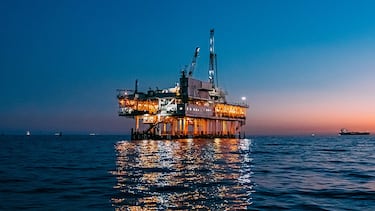
All of this leads to one unavoidable conclusion: the world has roughly 47 years of oil left if everything stays the same, based on global proven reserves of 1.7 trillion barrels and current consumption of 102 million barrels per day.
But no one should be under any illusion. Nothing will stay the same. Nothing ever does. There will be new technologies, new wells, new shipping routes, new wars, and new energy transitions.
But perhaps the most important thing about this global clock is not how many years are left overall. It is how much time each country has before it is forced to change everything.
Sheikh Yamani, the legendary Saudi oil minister, said it decades ago: “The stone age came to an end not for a lack of stones, and the oil age will end, but not for a lack of oil.”
Oman, with less than 15 years of breathing room, is already building green hydrogen plants. It understands that the key question is not how much sand is left in the hourglass, but how much time remains to learn how to live without it.
You and I will probably never see the last drop of oil, but we are living through something more fascinating: the moment when the people who have long owned the world started glancing nervously at the clock.
| Country | Proven reservations | Daily Production | R/P (years) |
|---|---|---|---|
| Venezuela | 303.2 B | 0.801 M bpd | 1037 years |
| Saudi Arabia | 267.2 B | 10.9 M bpd | 67 years |
| Iran | 208.6 B | 5.1 M bpd | 112 years |
| Iraq | 145 B | 4.4 M bpd | 90 years |
| EAU | 113 B | 4.0 M bpd | 77 years |
| Kuwait | 101.5 B | 2.7 M bpd | 103 years |
| Russia | 80 B | 10.8 M bpd | 20 years |
| USA | 83.7 B | 20.1 M bpd | 11 years |
| Libya | 48.4 B | 1.2 M bpd | 110 years |
| Nigeria | 37.3 B | 1.6 M bpd | 64 years |
| Kazakhstan | 30 B | 1.8 M bpd | 45 years |
| China | 28.2 B | 4.3 M bpd | 18 years |
| Qatar | 25.2 B | 1.8 M bpd | 38 years |
| Brazil | 15.9 B | 3.5 M bpd | 12 years |
| Norway | 6.9 B | 1.8 M bpd | 10 years |
| Mexico | 5.1 B | 1.9 M bpd | 7 years |
| Oman | 5.0 B | 0.993 M bpd | 14 years |
Related stories
Get closer to the game! Whether you like your soccer of the European variety or that on this side of the pond, our AS USA app has it all. Dive into live coverage, expert insights, breaking news, exclusive videos, and more. Plus, stay updated on NFL, NBA and all other big sports stories as well as the latest in current affairs and entertainment. Download now for all-access coverage, right at your fingertips – anytime, anywhere.
And there’s more: check out our TikTok and Instagram reels for bite-sized visual takes on all the biggest soccer news and insights.
Complete your personal details to comment