


Human evolution rewritten: A lost human population may have supercharged our brains-and given us 20% of our DNA
The influence of an unknown population and its impact on intelligence was discovered in our DNA by researchers using a new method they developed.
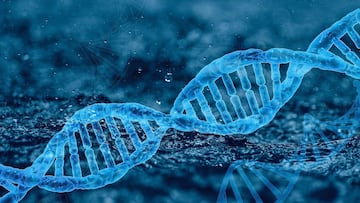
The story of human evolution just took a dramatic turn. According to a groundbreaking study published in Nature, modern humans may have inherited 20% of their DNA—and a boost in brainpower—from an ancient, previously unknown population. This revelation challenges long-held beliefs about our origins and suggests our genetic history is far more complex than we ever imagined.
A split 1.5 million years ago and a reunion 300,000 years ago
Researchers used a new genetic modeling technique to trace our ancestry back 1.5 million years. Their findings suggest that two early human populations—dubbed Population A and Population B—split apart at that time. Population A eventually gave rise to Neanderthals and Denisovans, while Population B remained largely distinct.
But the real surprise? Around 300,000 years ago, these two groups reconnected, merging their genetic lineages. As a result, modern humans carry a genetic legacy from Population B—particularly genes linked to brain function and neural processing.
“The fact that we can reconstruct events from hundreds of thousands or millions of years ago just by looking at DNA today is astonishing,” says Aylwyn Scally of the University of Cambridge, one of the study’s authors. “And it tells us that our history is far richer and more complex than we imagined.”
I'm very happy that our paper on admixture in deep human evolution is out now in Nature Genetics!https://t.co/cASkPsSPhI
— Trevor Cousins (@trevorcousins_) March 20, 2025
Thanks very much to my PhD supervisors Aylwyn Scally and Richard Durbin for their support throughout
A new genetic model reveals the hidden story
The study was conducted using a pioneering model called ‘cobraa,’ which allowed scientists to examine ancient genetic markers in unprecedented detail. By applying this method to human DNA datasets from the 1000 Genomes Project and the Human Genome Diversity Project, they uncovered compelling evidence of the Population A and Population B split.
One of the most striking discoveries was that after the split, Population A suffered a severe decline, leading to a loss of genetic diversity. However, it eventually rebounded and became the dominant ancestral group of modern humans. Meanwhile, Population B persisted separately—until their paths crossed again 300,000 years ago.
What this means for human evolution
The study found that approximately 80% of our DNA comes from Population A, while the remaining 20% can be traced back to Population B. More importantly, the genes inherited from Population B seem to have played a crucial role in the development of our cognitive abilities.
“Some of the genes from the population which contributed a minority of our genetic material, particularly those related to brain function and neural processing, may have played a crucial role in human evolution,” explains Trevor Cousins, co-author of the study.
“What’s becoming clear is that the idea of species evolving in clean, distinct lineages is too simplistic. Interbreeding and genetic exchange have likely played a major role in the emergence of new species repeatedly across the animal kingdom,” he added.
In this regard, the term ‘ghost populations’ is used to define those groups that separated for a period of time and later reconnected through interbreeding, giving rise to gene flow. “What is interesting about this paper is that the pattern in the model is a deep African structure that is shared by everyone living today,” John Hawks, a biological anthropologist at the University of Wisconsin-Madison, told Live Science.
A novel genetic model suggests that the ancestors of modern humans came from two distinct populations that split and reconnected during our evolutionary history. https://t.co/CUAkQOCq2n
— Live Science (@LiveScience) March 18, 2025
“It is not ‘ghost populations’ contributing to one particular group, it is one big ghost that merged in with the African source population for all modern humans,” he concluded.
Original article written by Raúl Izquierdo, translated with the assistance of AI and edited by Greg Heilman.
Related stories
Get your game on! Whether you’re into NFL touchdowns, NBA buzzer-beaters, world-class soccer goals, or MLB home runs, our app has it all.
Dive into live coverage, expert insights, breaking news, exclusive videos, and more – plus, stay updated on the latest in current affairs and entertainment. Download now for all-access coverage, right at your fingertips – anytime, anywhere.