


Joseph Stiglitz, economist: Globalization is producing “rich countries with poor people”
The Nobel Prize winner in Economics warns about the inequalities generated by the current economic model and advocates for regulated globalization.
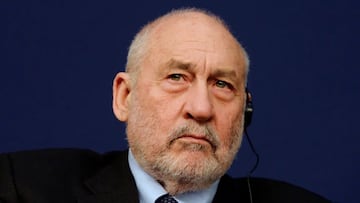
Joseph Eugene Stiglitz (Gary, Indiana, 1943) is one of the most influential figures in contemporary economic thought. Awarded the Nobel Prize in Economics in 2001 for his groundbreaking work on information economics, his career blends academic rigor with an active role in global public debate. He has been a professor at Columbia University and served as chief economist of the World Bank.
Over the past several decades, the American economist has warned that in many countries rising national wealth coexists with stagnant wages, job insecurity, and unequal access to basic services. This paradox - summed up in the notion of “rich countries with poor people” - captures, for Stiglitz, the limits of a system focused on market forces and insufficiently concerned with redistribution.
Stiglitz is also a prolific and influential author. Among his most notable books are Globalization and Its Discontents (2002), The Price of Inequality (2012), and his most recent work, The Road to Freedom: Economics and the Good Society (2024), in which he reflects on the role of economics in shaping freer and more equitable societies.
A critique of the dominant economic model
Stiglitz’s experience in international institutions profoundly shaped his thinking. During his time at the World Bank, he became especially critical of the structural adjustment policies promoted by the International Monetary Fund (IMF) in developing countries. In his analysis, these measures - centered on cuts to public spending and rapid liberalization - deepened poverty and economic instability in many regions.
After the 2008 financial crisis, Stiglitz intensified his criticism of the global financial system and its lack of oversight. He has been one of the most forceful voices against the so‑called neoliberal consensus, or “Washington Consensus.” He warned about the risks posed by an oversized financial sector and argued for stronger public regulation to prevent recurring crises and shield citizens from their fallout.
More recently, Stiglitz has been active in debates on inequality, climate change, and the economic impact of the pandemic. In these areas, he stresses the essential role of the state in safeguarding the public interest and the need for progressive taxation, investment in education, and a transition to a greener economy.
Far from rejecting globalization, Stiglitz advocates reforming it. His proposal calls for fairer rules, more democratic international institutions, and an economy oriented toward social well‑being.
Related stories


It's 85 seconds to 'Doomsday'
Get your game on! Whether you’re into NFL touchdowns, NBA buzzer-beaters, world-class soccer goals, or MLB home runs, our app has it all.
Dive into live coverage, expert insights, breaking news, exclusive videos, and more – plus, stay updated on the latest in current affairs and entertainment. Download now for all-access coverage, right at your fingertips – anytime, anywhere.
Complete your personal details to comment