


Julius Caesar, military genius: “Men readily believe what they wish to believe”
The Roman general is considered one of the greatest strategists in history. Beyond that, he was also a renowned orator and writer.
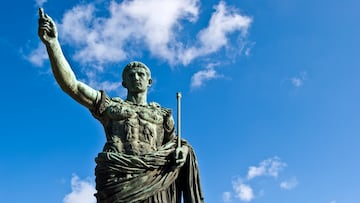
When one thinks of the Roman Empire, inevitably a single name comes to mind: Gaius Julius Caesar, better known as Julius Caesar. Born on July 12, 100 BC, he is one of the most prominent figures of classical antiquity. His work as a Roman politician and military leader was crucial to the fall of the Roman Republic and the rise of the empire.
History remembers him as one of the world’s great strategists, on a level with figures like Alexander the Great or Napoleon. Many of the battles he fought were recounted by Caesar himself in one of the most dreaded books for Latin students, Commentaries on the Gallic War (Commentarii de Bello Gallico).
He was born into a patrician family of modest means but gradually made his way to power, eventually holding positions such as dictator for life and imperator for life. His greatest mistake was creating the perception that he aspired to be king, a belief that ultimately led to his assassination by a group of senators, including Cassius and Marcus Junius Brutus, his stepson and protégé. This is where the famous line attributed to his last words comes from: “You too, Brutus, my child.”
A master strategist
Beyond being a remarkable military strategist, Caesar’s career brought him significant victories, such as the Battle of Bibracte, his first major campaign in Gaul against the Helvetii; the Battle of the Sabis River against the Nervii; and the Battle of Alexandria, which secured his alliance with Cleopatra, the queen of Egypt, with whom he had a relationship.
In his book about these campaigns, Caesar recorded many phrases for which he is still remembered today. One of them is, “Men easily believe what they wish.” This statement, made around 48 BC, highlights the human tendency to accept as true what one desires, even when it is not accurate.
At the time, Caesar used this idea to explain how his enemies, the Veneti, underestimated the risks of attacking the Romans because of their strong desire for victory. The phrase suggests that personal desires and ambitions can cloud objective judgment, turning what is wished for into perceived reality. Caesar understood this aspect of human psychology and used it to his advantage.
This idea also described events during the civil war against Pompey, a time of political tension and manipulation of information by the opposing side. Caesar recounted how Pompey’s supporters blindly believed any optimistic rumor or news, such as claims that Caesar was weakened or experiencing desertions, even when there was no real evidence. The phrase illustrates how self-deception weakened his opponents.
On the battlefield, Caesar was a shrewd leader who maintained complete control of the situation. He preferred to win by outmaneuvering his enemies rather than by attrition. The Gallic Wars are a prime example, where he forced the Gauls to fight on terms favorable to him. He was also a leader who fought alongside his soldiers, which greatly boosted their morale.
Related stories
Get your game on! Whether you’re into NFL touchdowns, NBA buzzer-beaters, world-class soccer goals, or MLB home runs, our app has it all.
Dive into live coverage, expert insights, breaking news, exclusive videos, and more – plus, stay updated on the latest in current affairs and entertainment. Download now for all-access coverage, right at your fingertips – anytime, anywhere.
Complete your personal details to comment