


Lost in the blizzard: The chilling truth of the “Colorado Cannibal” and his gruesome legacy in the mountains
Alfred Griner Packer was a 19th century prospector who confessed to cannibalism, although his story was later called into question.
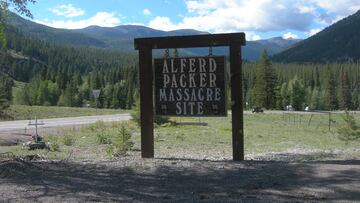
There are some names, some stories, that are known far and wide for shocking acts of criminality. However the name ‘Alfred Packer’ is less notorious.
Packer would earn the nickname the ‘Colorado Cannibal’ after he was found guilty of a string of horrific murders while serving as a wilderness guide across Utah and Colorado.
He initially thought that he had got away with it, until authorities uncovered his story...
What did the Colorado Cannibal do?
Packer was one of countless gold and silver prospectors operated in the Rocky Mountains in the 1860s and he, like other, supplemented his income with work as a guide.
In late 1873 he led a party of 21 men towards the gold fields of Breckenridge, Colorado. It was a harsh winter and the party took three months to make it to the camp of the Ute Indian Chief Ouray.
Chief Ouray told the men to stay and rest at the camp but Packer and five others pressed on with the journey. That was the last time that those five unfortunate travelers would be seen alive.
After two months Packer turned up at the Los Piños Indian Agency, claiming to have been separated from the group in a blizzard. However he was later found to have gained a lot of extra money and items seemingly from the missing men.
At this point Packer changed his story, claiming that four of the companions had died in the tough conditions and the survivors had eaten them out of desperation. One man, Packer claimed, had gone insane and attacked him, forcing Packer to shoot him.
However a later party then came across the remains of all five men at a single campsite, disproving Packer’s claims. He was arrested and charged with murder but soon escaped and was able to evade re-capture for nine year.
Eventually, in 1883, he was arrested again and Packer offered up another explanation, this time blaming the murders on the man who had gone insane. Despite having twice changed his own story, Packer was finally convicted of the lesser crime of manslaughter and was freed on parole in 1901. He went on to work as a guard for the Denver Post until his death in 1907.
Related stories
Get your game on! Whether you’re into NFL touchdowns, NBA buzzer-beaters, world-class soccer goals, or MLB home runs, our app has it all.
Dive into live coverage, expert insights, breaking news, exclusive videos, and more – plus, stay updated on the latest in current affairs and entertainment. Download now for all-access coverage, right at your fingertips – anytime, anywhere.
Complete your personal details to comment