


Louis Pasteur, scientist: “True friends have to get angry with each other from time to time”
A 19th-century scientist whose work served to save millions of lives, Pasteur is remembered as one of the great pioneers of modern medicine.
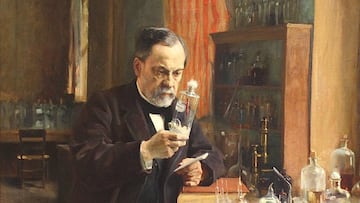
Louis Pasteur, the man who would go on to save millions of lives, is remembered as one of the great pioneers of modern medicine. His theory about microscopic life forms and their link to contagion and disease remains foundational today, and proved crucial during the covid‑19 pandemic.
No one could have guessed that in the small French town of Dole, a man born in late 1822 would change the course of medical history. Contrary to what many might assume, Pasteur was never a standout student in the sciences. As a young man, he showed exceptional talent as a painter, and his ambition was to become an art teacher.
But his path would shift dramatically toward science. In 1847, he earned his doctorate with a thesis in physical chemistry, and by 1854 he had been appointed dean of the Faculty of Sciences at the University of Lille. Though he never became a physician or professor of medicine, his fascination with chemistry would cement his place as one of the key architects of modern medical science.
Airborne and contact transmission
His first major achievement still bears his name today: pasteurization. For a decade, Pasteur was convinced that microscopic contamination was responsible for food spoilage. After extensive studies and trial‑and‑error experiments, he succeeded in proving his theory and secured a patent for the method. That breakthrough rescued the milk, wine, and beer industries.
But his journey was far from smooth. Influential scientific circles harshly criticized his conclusions, refusing to accept that microorganisms did not spontaneously generate. In the end, time proved Pasteur right. The criticism did nothing to diminish his convictions; instead, it pushed him deeper into what became known as the germ theory of infectious disease - the idea that contagion spreads because microorganisms can be transmitted from one person to another through the air or physical contact.
During the pandemic, millions of people wore masks to limit transmission and washed their hands constantly. These preventive measures helped to curb the spread of covid‑19 - and, in large part, owe their scientific foundation to Pasteur’s discoveries. He was among the first to explain that viruses could spread through airborne particles or touch. His theory endured and continues to save lives to this day. “Science is the future of humanity,” he once said, arguing that scientific breakthroughs are essential to improving human survival.
Society showed its gratitude
From a young age we’re taught that the flu and similar viruses spread quickly, which is why handwashing and avoiding close contact with sick individuals is essential. Yet this idea - so obvious to us now - was once a source of ridicule. Accepting germ theory would have forced scientists of the time to acknowledge a harsh truth: by treating infected patients and then handling others without taking preventive measures, they had inadvertently contributed to numerous deaths. It was a difficult reckoning, one that took years to be accepted within the scientific community.
In 1894, the world of science bid farewell to one of the great pioneers of medical research after Pasteur suffered a fatal bout of uremia. France honored him with a state funeral, initially burying him at Notre‑Dame Cathedral before transferring his remains to the Pasteur Institute. During his lifetime, scientific institutions rarely embraced his theories or investigations. “True friends must argue from time to time,” he liked to say. Yet despite the criticism, society ultimately recognized the profound impact of his work on medicine.
Related stories
Get your game on! Whether you’re into NFL touchdowns, NBA buzzer-beaters, world-class soccer goals, or MLB home runs, our app has it all.
Dive into live coverage, expert insights, breaking news, exclusive videos, and more – plus, stay updated on the latest in current affairs and entertainment. Download now for all-access coverage, right at your fingertips – anytime, anywhere.
Complete your personal details to comment