


Mark your calendar: The 2026 total solar eclipse is only a year away: Where to catch the spectacular cosmic event
A total solar eclipse, when the Moon blocks the Sun, will next occur in August 2026—visible in Spain, Iceland, and more, but not in most of North America.
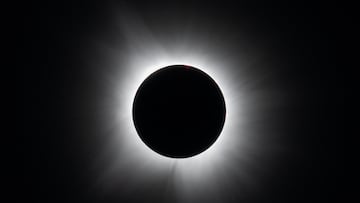

It is an event that has inspired songs, and whose impact on the natural environment has been a source of wonder to humans for millennia: a total solar eclipse. The sky goes dark in just minutes; it can begin to look like night has fallen, just to be broken back into daylight as the sun and moon continue their dance across space.
A total solar eclipse occurs when the Moon comes between the Earth and the Sun, creating the projection of a shadow on our planet, momentarily plunging part of the day into darkness. The most striking thing about this spectacle is the appearance of the solar corona, the outer atmosphere of the Sun, which becomes visible through a slight glow that surrounds the Moon.
This event should not be confused with a lunar eclipse, where the Earth passes between the Moon and the Sun, turning the Moon a reddish color.
Scientists at #AGU2024 revealed early findings from the April 2024 total solar #eclipse. Here's what they found:
— NASA (@NASA) December 10, 2024
- The Sun’s corona changed during the eclipse
- Eclipses affect radio communications
- Eclipses cause ripples in Earth's atmosphere pic.twitter.com/4ZhYcfrfDG
When will the next total solar eclipse take place?
The next total solar eclipse that will be visible to the world will occur in August 2026, almost exactly a year from today. According to NASA, totality will be visible over the Arctic Ocean, Greenland, Iceland, the Atlantic Ocean, and Spain. However, North America will have to wait until 2033 for a viewing of the celestial phenomena, and even during that event, it will only be visible from Alaska.
How often does a total solar eclipse occur?
According to NASA calculations, a solar eclipse can occur two to three times per year. However, a total solar eclipse, which is when the Moon completely covers the Sun, usually occurs twice every three years. The agency says that for these to occur in the same place is almost impossible.
Related stories
Get your game on! Whether you’re into NFL touchdowns, NBA buzzer-beaters, world-class soccer goals, or MLB home runs, our app has it all.
Dive into live coverage, expert insights, breaking news, exclusive videos, and more – plus, stay updated on the latest in current affairs and entertainment. Download now for all-access coverage, right at your fingertips – anytime, anywhere.
Complete your personal details to comment