


Millions could be affected by Saharan dust in U.S.: what you should know and how to protect your family
It’s dust plume season in the US, when massive clouds of dust from the Sahara Desert make their way across the Atlantic Ocean. Here’s what to know.
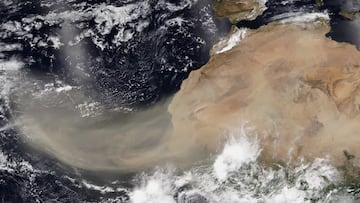

This week the first major dust clouds from the Sahara Desert traveled some 4,000 miles across the Atlantic covering the Caribbean, Gulf and even reaching parts of the southern United States. Also known as haboobs, these dust storms begin forming in late spring and continue through late fall.
The peak of the dust plume season is between mid-June to late July during which time dust outbreaks leave the coast of Africa roughly every three to five days. These phenomena can provide several benefits but can also adversely affect some people’s health.
What you should know about Sahara dust storms and how to protect your family
While the dust storms turn the skies hazy, the actual particles typically stay high in the atmosphere, about a mile up, and have little affect on air quality and health for most people. However, Jason Dunion, a hurricane scientist at NOAA, told NPR that he always recommends that people check with their local experts. Especially those with asthma and the elderly who “can be a little bit more prone when we have these dust outbreaks come through.”
On the other hand though, these dust storms can provide people with the opportunity to get some even more spectacular photos of the sunrise or sunset. The dry air, 50% more than tropical air, stifles clouds and the calm sky turns a milky-white as the sun’s rays scatter.
These dust clouds travel in what is known as the Saharan Air Layer, a 2- to 2.5-mile-thick layer in the atmosphere, which along with its dryness is characterized by warmer air and strong winds. These help to suppress tropical cyclone formation and intensification according to NOAA.
Furthermore, the particles in the clouds can contain minerals that can be beneficial to ecosystems on land and in the sea as well. Dust from the Sahara is believed to fertilize the Amazon rainforest and provide minerals such as iron and phosphorus, that are lacking in some parts of the ocean, which are beneficial to biomass production.
Related stories
Get your game on! Whether you’re into NFL touchdowns, NBA buzzer-beaters, world-class soccer goals, or MLB home runs, our app has it all.
Dive into live coverage, expert insights, breaking news, exclusive videos, and more – plus, stay updated on the latest in current affairs and entertainment. Download now for all-access coverage, right at your fingertips – anytime, anywhere.
Complete your personal details to comment