


Mysterious “devil fish” appear on Mediterranean beaches—experts warn it’s a troubling sign
Sightings of massive Mobula rays—rare creatures known as “sea devils”—have stunned tourists and alarmed scientists.
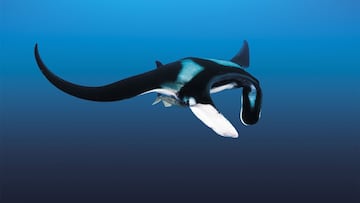
Vacationers along the French Mediterranean coast have been witnessing an extraordinary sight this summer: giant Mobula rays, nicknamed “devil fish,” gliding near the shoreline in unusually high numbers.
These rays, which can weigh up to 770 pounds and appear to “fly” underwater with their wing-like fins, have been spotted around Béziers, Marseille, Agde, and Sète. Normally, encounters this close to the coast are extremely rare.
One beachgoer described the moment as “magical,” while another recalled her shock: “I saw two little fins and thought, it can’t be—it was a ray!”
Why are Mobula rays approaching the coast?
Marine experts are still searching for answers. Some believe the unusual presence of Mobula rays may be linked to shifts in plankton, their primary food source.
“It may be a change in the composition of plankton that’s drawing them closer,” explained Aurélien Guay, a marine tour organizer who says he has never seen so many rays in the area. He also suggested that wind, water temperature, and salinity could be contributing factors.
Typically, Mobula rays live far offshore in deep waters. Other species in this family, such as manta rays, prefer tropical oceans and can reach an astonishing 30 feet across and weigh more than two tons.
Mobula rays can jump over two meters out of the water and remain airborne for several seconds. The reason for this behavior is still unknown, but hypotheses include attracting mates, removing parasites, long-distance communication, or just to have fun.pic.twitter.com/JTXwFXvdtp
— Wonder of Science (@wonderofscience) November 15, 2024
A warning sign for the environment
While the sightings have thrilled tourists, scientists are raising the alarm after several rays were found stranded on beaches near Béziers—something experts describe as deeply troubling.
“These are not rays that bury themselves in sand; they live in the open ocean at depths of more than 3,000 feet,” said Matthieu Lapinski, a marine biologist and president of the conservation group Ailerons. “They don’t belong on beaches. The fact that they’re coming this close is a very bad sign. This year has been extremely concerning.”
The Mobula ray is listed among the world’s most endangered marine species, threatened by plastic pollution and overfishing. Their sudden proximity to Mediterranean beaches not only puzzles scientists but may also signal a wider ecological imbalance with unpredictable consequences.
Related stories
Get your game on! Whether you’re into NFL touchdowns, NBA buzzer-beaters, world-class soccer goals, or MLB home runs, our app has it all.
Dive into live coverage, expert insights, breaking news, exclusive videos, and more – plus, stay updated on the latest in current affairs and entertainment. Download now for all-access coverage, right at your fingertips – anytime, anywhere.
Complete your personal details to comment