


Mystery revealed: How Easter Island’s head statues were produced and transported
The island’s giant moai statues have fascinated historians since they were first discovered by European travelers in the early 18th Century.
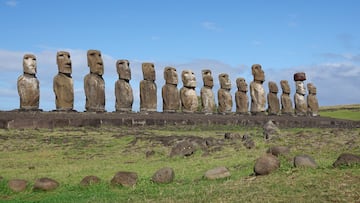
Nearly 950 moai statues have been discovered on Easter Island, Chile. Carved by the Rapa Nui people between 1200 and 1700 AD, most of these massive stone figures stand partially buried, facing inland as if guarding the island. A smaller number were erected on ceremonial platforms (ahu) and look out toward the sea.
The statues were chiseled out from the volcanic cone of the Rano Raraku quarry. Several methods were used but in many cases, it is believed that two carvers would work underneath from both sides until figures were separated from the source material.
Archaeologists estimate that about 400 moai remain in the Rano Raraku quarry — the volcanic site where the stone was extracted — and another 62 are scattered between the quarry and ceremonial platforms along the volcanic island’s coastline.
How were Easter Island’s statues moved?
One of the biggest mysteries which still captivates scientists is how these colossal, megalithic statues, some towering up to 33 feet tall and weighing as much as 86 tons, were transported across rugged terrain as far as 11 miles from the quarry. Were they abandoned mid-journey, or deliberately left behind?
Easter Island (Rapa Nui) in Chile 🇨🇱
— Archaeo - Histories (@archeohistories) April 25, 2025
It lies isolated in southeastern part of Pacific ocean and is an island that was inhabited by Polynesian people. Location is famous for its almost 1000 monumental statues known as Moai, which can be found scattered all across island.… pic.twitter.com/85CuxY07WW
The “walking” hypothesis
A recent study published in the Journal of Archaeological Science offers a striking answer: the moai may have been “walked” to their destinations. Relatively small work groups of 15–50 men would have been enough to move even the largest moai by rocking it back and forth on its journey from the Rano Raraku quarry to the coast.
Led by Professor Carl Philipp Lipo Associate Dean for Research and Programs at Binghamton University’s Anthropology department and Professor Terry Hunt of the University of Arizona, researchers used 3D modeling to analyze the statues’ proportions. They found that the moai bases are shaped like a “D” and tilt slightly forward — design features that would allow the statues to rock and wobble forward in a controlled, upright motion.
This suggests the Rapa Nui moved the statues vertically, swaying them side to side in a dynamic “walking” process.
Engineering genius without machines
According to Lipo, each statue’s journey left behind a path that made it easier for the next one to follow: “Every time the Rapa Nui moved a statue, it looked like they had created a road. The road was part of the statue’s transport,” he told The New York Times.
The findings highlight the sophisticated engineering of the Rapa Nui, who managed to move these giant sculptures without cranes, wheels, or massive ramps — relying instead on ingenuity, teamwork, and design.
Related stories
Get your game on! Whether you’re into NFL touchdowns, NBA buzzer-beaters, world-class soccer goals, or MLB home runs, our app has it all.
Dive into live coverage, expert insights, breaking news, exclusive videos, and more – plus, stay updated on the latest in current affairs and entertainment. Download now for all-access coverage, right at your fingertips – anytime, anywhere.
Complete your personal details to comment