


Neither drugs nor illegal immigration: This is what the US can’t stop entering the country from Mexico
Toxic sewage flowing from Tijuana into Southern California has shut beaches for years and triggered a public health crisis.
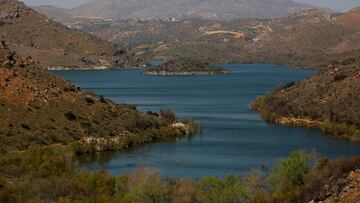

The Tijuana River rises in Baja California, Mexico, and flows north into Southern California, emptying into the Pacific at Imperial Beach. Along the way, it carries a massive load of pollution. Every day, tens of millions of gallons of untreated sewage, urban trash, industrial waste and other debris move downstream, eventually reaching the U.S. coastline.
Imperial Beach closed for years
The smell is overpowering and the water conditions are so dangerous that Imperial Beach has been closed for more than 1,200 consecutive days, according to The New York Times. The reason is the steady flow of roughly 53 million gallons of untreated wastewater per day coming from Tijuana.
Tests of coastal waters have detected contaminants including arsenic, heavy metals, hepatitis, E. coli, salmonella and banned pesticides such as DDT.
“This is a ticking public health time bomb that is not being taken seriously. We need help,” said Imperial Beach Mayor Paloma Aguirre. According to The New York Times, even breathing the air can be harmful, since toxic particles from the polluted water can become airborne.
Tijuana River leads to health issues
The health consequences have extended well beyond beachgoers. More than 1,100 U.S. Navy recruits fell ill with gastrointestinal diseases after training on beaches in southern San Diego County, according to the Navy’s Office of the Inspector General.
Nearly half of the region’s 40,900 households have also reported health issues, including migraines, skin rashes and breathing difficulties. The Centers for Disease Control and Prevention says these problems were very likely linked to wastewater from the Tijuana River.
Binational fixes struggle to keep up
Authorities on both sides of the border have tried to curb the pollution. In July, the United States and Mexico signed a memorandum of understanding aimed at addressing sewage discharges affecting the river on both sides of the border, according to Mexico’s Environment and Natural Resources Secretary Alicia Bárcena.
Mexico committed to upgrading the San Antonio de los Buenos wastewater treatment plant in Tijuana, which can process about 211 gallons per second. The United States, meanwhile, is rehabilitating the South Bay International Wastewater Treatment Plant. Still, The New York Times reports that both facilities are struggling to keep pace with Tijuana’s explosive population growth.
Concrete barrier tries to stop trash
As an emergency measure, the U.S. installed a massive concrete barrier across the river about a year ago, according to BorderReport. The structure weighs roughly 132 tons and was designed to prevent contaminated debris from crossing into the United States.
During the most recent rainy season, the barrier intercepted about 551 tons of trash.
“In just over an hour, we collected 22 tons of garbage,” Oscar Romo, director of Alter Terra, the company that installed the barrier, told BorderReport. “If this is any indication of what’s coming, we expect far more than 551 tons this season.”
Related stories
Get your game on! Whether you’re into NFL touchdowns, NBA buzzer-beaters, world-class soccer goals, or MLB home runs, our app has it all.
Dive into live coverage, expert insights, breaking news, exclusive videos, and more – plus, stay updated on the latest in current affairs and entertainment. Download now for all-access coverage, right at your fingertips – anytime, anywhere.
Complete your personal details to comment