


Neither gold nor platinum: This rare mineral costs hundreds of dollars per carat and is found almost exclusively in one remote country
Jadeite is a rare, hard-to-mine mineral found almost entirely in Myanmar, and it’s surrounded by ancient myths.
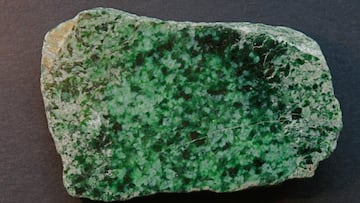

When most people think of the world’s most expensive minerals, gold is usually the first to come to mind. And rightly so as its value tends to hold steady during economic downturns. Others like palladium and silver are also prized, thanks to their broad use in jewelry and industrial applications.
But there’s one lesser-known mineral that has quietly captured the attention of experts: jadeite. Its price can reach hundreds, or even millions, of dollars per carat, making it one of the most valuable minerals on Earth. A sodium and aluminum silicate belonging to the pyroxene group, jadeite is one of two forms of jade (the other, nephrite, is more common and less valuable).
The high price of jadeite, especially the deep green variety known as “imperial jade”, stems from its rarity. It only forms under specific geological conditions: high pressure and low temperature. These conditions occur mainly in Myanmar, a Southeast Asian country bordering Thailand and Laos.
Roughly 70% of the world’s jadeite is produced in Myanmar. Smaller deposits have also been found in countries like Guatemala (famous for its blue jadeite), Japan, Russia, Mexico, and the United States (particularly in California). However, extraction is often difficult due to the mineral’s location in remote mountainous regions.
Myths surrounding jadeite
In Asia, jadeite holds deep cultural significance, symbolizing prosperity and health. Myths and legends about the stone are especially common across the continent. In ancient China, jadeite was seen as a sacred stone believed to grant spiritual immortality. It was thought to protect the soul after death, which is why jadeite was often placed in the tombs of emperors.
The Maya civilization also held jadeite in high regard—considering it more valuable than gold. It was associated with gods, fertility, and eternal life. During funerals, jadeite masks were often placed over the faces of the dead as a symbol of life’s breath—representing the hope of immortality in the afterlife.
Related stories
Get your game on! Whether you’re into NFL touchdowns, NBA buzzer-beaters, world-class soccer goals, or MLB home runs, our app has it all.
Dive into live coverage, expert insights, breaking news, exclusive videos, and more – plus, stay updated on the latest in current affairs and entertainment. Download now for all-access coverage, right at your fingertips – anytime, anywhere.
Complete your personal details to comment