


New data on interstellar comet 3I/ATLAS: Spanish scientists identify it as a primordial “time capsule”
Spanish researchers have traced the path of comet 3I/ATLAS, an interstellar traveler that may hold clues to the origins of distant worlds.
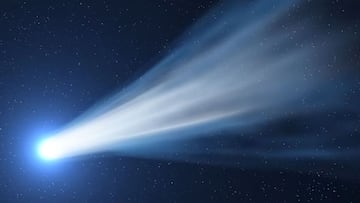
When astronomers first spotted comet 3I/ATLAS streaking across the night sky this past July, they realized they weren’t just witnessing another icy wanderer from our solar system — they were looking at something far rarer.
This mysterious object, officially classified as interstellar, is a visitor from another planetary system entirely. Researchers now believe it could act as a kind of “cosmic time capsule,” preserving ancient material from the dawn of another star’s history.
A galactic detective story
A team led by Xabier Pérez Couto, a researcher at the Center for Information and Communication Technology Research (CITIC) at the University of A Coruña in Spain analyzed the path that this galactic visitor has taken to reach out solar system. Pérez Couto and his colleagues have successfully reconstructed the trajectory of 3I/ATLAS, tracing its journey through the Milky Way over the past 10 million years.
To do this, the scientists relied on data from the European Space Agency’s (ESA) Gaia mission, which is creating the most precise map of our galaxy ever made by measuring the exact positions and motions of its stars.
“What makes 3I/ATLAS unique,” Pérez Couto explained, “is that it allows us to study the evolution of objects originating from other star systems, something we’ve only seen in theory until now. Each observation is like opening a window into the Universe’s past.”
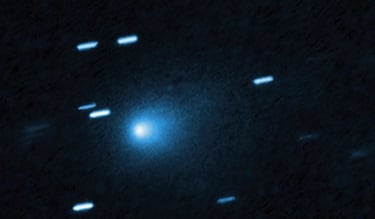
A visitor from afar
The comet was first detected on July 1 through the ATLAS (Asteroid Terrestrial-impact Last Alert System) observatory in Chile. Despite its proximity in cosmic terms, 3I/ATLAS will never come closer than about 270 million kilometers (roughly 168 million miles) from Earth.
That means there’s no danger of impact — but there’s plenty to learn. According to Spanish outlet El Tiempo, the comet’s origin lies around another star somewhere in the Milky Way, making it one of only three known interstellar objects ever discovered, alongside ‘Oumuamua (2017) and 2I/Borisov (2019).
Why interstellar visitors matter
The European Space Agency has already captured images of 3I/ATLAS, and astronomers worldwide are eager to study it. These interstellar travelers are immensely valuable because they carry chemical fingerprints from other planetary systems — snapshots of what distant worlds might look like or how they formed.
In a sense, 3I/ATLAS is like a message from another time and place, frozen in ice and dust. And as it passes silently through our solar neighborhood, scientists are racing to decode what it has to tell us about the cosmic story we all share.
Related stories
Get your game on! Whether you’re into NFL touchdowns, NBA buzzer-beaters, world-class soccer goals, or MLB home runs, our app has it all.
Dive into live coverage, expert insights, breaking news, exclusive videos, and more – plus, stay updated on the latest in current affairs and entertainment. Download now for all-access coverage, right at your fingertips – anytime, anywhere.
Complete your personal details to comment