


Night sky events on August 10: Skywatchers are in for a treat this weekend | Pallas asteroid and planetary alignment
Catch August’s sky show: Pallas asteroid, Venus-Jupiter conjunction, and Perseids meteor shower light up the night from Aug 10–13!

For families who love spending summer evenings stargazing in the backyard or at a local park, August is packed with can’t-miss celestial events.
On August 10, just one day after August’s full moon lights up the night sky, viewers may be able to catch a glimpse of a “Big 4” asteroid—2 Pallas—as it travels across the skyline. According to Space Reference, the asteroid 2 Pallas, roughly the size of Great Britain (about 513 kilometers in diameter), will be at opposition, meaning it will be directly opposite the Sun in the sky. This alignment allows the asteroid to be fully illuminated, making it easier to spot as it moves through the constellation Delphinus.
On this day in 1802, Heinrich Wilhelm Olbers discovered 2 Pallas, the second asteroid ever discovered. Five years and one day later he discovered 4 Vesta, one of the largest objects in the asteroid belt. pic.twitter.com/RH0FJc8WPh
— National Air and Space Museum (@airandspace) March 28, 2021
Using a telescope or binoculars will offer the best chance to view this celestial object. However, the Moon’s brightness and size at the time may make it more challenging to see.
Don’t miss the planetary parade
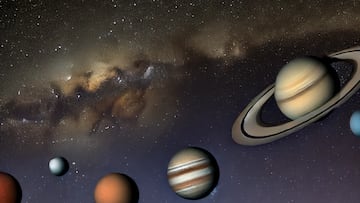
While many may be focused on 2 Pallas’s trajectory across the night sky, August 10 also brings a planetary parade featuring Mercury, Venus, Mars, Jupiter, and Saturn. The exact timing of their appearances will vary, stretching from sunrise to the late hours of the night.
Make sure to catch the Venus-Jupiter Conjunction
NASA reports that Venus will be visible in the east each morning before sunrise, with viewers advised to look about 20 to 30 degrees above the horizon. Like Venus, Jupiter will greet early risers, though it won’t appear as bright.
On August 11 and 12, these two bright planets will come into conjunction, appearing close together in the night sky. According to NASA, they will be just a degree apart on both nights.
Following this event, the Perseids meteor shower will reach its peak on August 13. Although an 84%-full Moon may interfere with visibility, NASA still expects viewers to catch “a few bright meteors,” though it cautions that “viewing conditions are not ideal this year.”
Related stories
Get your game on! Whether you’re into NFL touchdowns, NBA buzzer-beaters, world-class soccer goals, or MLB home runs, our app has it all.
Dive into live coverage, expert insights, breaking news, exclusive videos, and more – plus, stay updated on the latest in current affairs and entertainment. Download now for all-access coverage, right at your fingertips – anytime, anywhere.
Complete your personal details to comment