


No, Elon, we’re not going to Mars, and here’s why scientists say it’s impossible
A pipe dream or a scam to enrich himself further? Here’s why scientists are skeptical of Elon Musk’s dream for humans to colonize Mars.
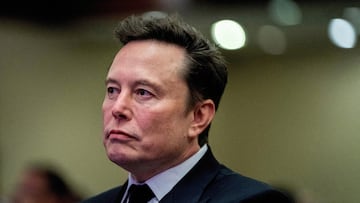

Long before billionaire Elon Musk became one of Donald Trump’s most lucrative political donors and advisors, the president accused him of building a business empire on the back of government subsidies. From Tesla to SpaceX, the impact of subsidies from both state and federal governments allowed these companies to reach their current value.
“When Elon Musk came to the White House asking me for help on all of his many subsidized projects, whether it’s electric cars that don’t drive long enough, driverless cars that crash, or rocketships to nowhere, without which subsidies he’d be worthless, and telling me how he was a big Trump fan and Republican, I could have said, ‘drop to your knees and beg,’ and he would have done it.”
Donald Trump, US President
Actor Mark Ruffalo takes a hit at Musk’s plan for Mars
Musk frequently discusses the need for humans to colonize Mars but rarely provides details on his motivations. In late 2024, he posted on X, the social media platform he owns, that a human-led voyage to Mars could be possible within the next four years and that in just twenty years, a self-sustaining city could be thriving on the barren planet.
The first Starships to Mars will launch in 2 years when the next Earth-Mars transfer window opens.
— Elon Musk (@elonmusk) September 7, 2024
These will be uncrewed to test the reliability of landing intact on Mars. If those landings go well, then the first crewed flights to Mars will be in 4 years.
Flight rate will… https://t.co/ZuiM00dpe9
One detail that Musk often neglects to mention is the price such a project would have, how much would need to be funded by the public purse, and how much financing his company, SpaceX, would be able to receive in federal contracts.
Earlier this week, beloved actor Mark Ruffalo weighed in on X, providing context for Musk’s recent efforts to dismantle USAID, the largest donor of international aid in the world. “Elon Musk wants his Empire on Mars,” wrote the actor. Ruffalo added that the first time he met the billionaire, Musk “pressed upon me [...] that he was going to go to Mars and set up a civilization there.” As Ruffalo sees it, the moment Musk “realized there was no way to get there without cleaning out government coffers,” he turned on humanitarian projects funded by US taxpayers.
Elon Musk wants his Empire on Mars. The reason he wants to shut down USAid is that he wants tax payer money to fund and build his empire there. I know that sounds insane, and it is. The one thing Elon pressed upon me when I first met him was that he was going to go to Mars and…
— Mark Ruffalo (@MarkRuffalo) February 3, 2025
“Keep your eye on the ball. When Elon slashes costs, it’s for his own pocket and no one else’s,” argued the actor, adding that Musk enriched himself on government contracts and is now “gaming the system” with Trump as his “lapdog.”
What does the science say?
The science is not on Elon’s side. While investments in the necessary technologies for human travel to Mars could begin, they are hard to justify, given the economic conditions of the average American household and the prospects younger generations have in the global economy relative to their parents and grandparents.
The challenge of reaching the red planet
Experts at NASA addressed this issue in a podcast released in 2018. Dr. Stan Love, a NASA astronaut, explained that while space travel to the International Space Station has become “frequent,” even reaching the Moon, our nearest celestial object, is far more challenging. Dr. Love noted that when the US federal government allocated a greater share of the budget to space exploration, the country managed to send six crews to the Moon over a forty-year period. Mars, however, is 250 million miles from Earth—1,000 times further than the Moon. This distance presents the first set of challenges that scientists have yet to overcome, namely, ensuring a vehicle can travel the distance and protect the astronauts from the radiation exposure they would face during the journey.

Given the current capabilities of space travel developed by NASA and other organizations, it would take between one and a half to three years to reach the red planet. Here on Earth, we are protected from solar radiation by our atmosphere. However, the brave souls seeking to reach the red planet would leave that protective layer and, during their trip and once on Mars, would experience radiation levels between forty and fifty times higher than those on Earth.
The dangerous work of the first colonists
Landing on the surface of Mars is a complex endeavor. Unlike Earth, Mars lacks a protective atmosphere, making it challenging to slow down the spacecraft during descent. Furthermore, Dr. Love has raised concerns about the travelers' capacity to carry all necessary supplies for their survival, assuming they successfully arrive.
Related stories
“Think about your pack if you were going to some place that didn’t have modern conveniences and we’re going for a week, and now think that’s going to be a three-year round-trip to Mars and I get — there are no stores," explained Dr. Love.
I have to bring everything I need and oh, by the way, I’m in an environment that will kill me in about three minutes the whole time, out there and back, and would render me unconscious in seven seconds, so I don’t even have three minutes to do stuff.
Dr. Stan Love, NASA astronaut
Assuming a group of humans reaches Mars, they will find a barren wasteland inhospitable to the necessary resources to sustain human life. The lack of atmosphere means there is no breathable air, and the absence of fresh flowing water poses risks for the project’s sustainability if the resources brought are destroyed. And if something goes wrong, there is currently no way to ensure the astronauts' safe return to Earth.
Complete your personal details to comment