


Not Egypt, not Peru: the world’s oldest mummies were discovered in this surprising region
The date for the earliest mummification of human remains has been pushed back thousands of years thanks to new research that solved a nagging question.
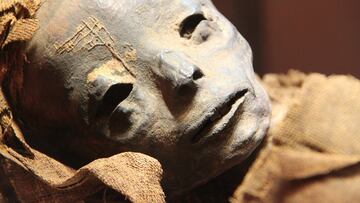

Thousand years before the most famous mummies were being prepared to be entombed in Egypt, hunter-gatherers in Southeast Asia were already practicing preservation techniques on their dead. They even pre-date what until now were the oldest known mummies from the Chinchorro people in northern Chile and southern Peru that developed mummification techniques around 7,000 years ago.
Researchers notice the similarities between present day mummification methods among indigenous communities in Papua New Guinea and skeletal remains discovered in dozens of locations spread over southern China, northern Vietnam, and Indonesia which led them to dig further. The oldest of these mummies is from around 14,000 years ago.
“A timeless human impulse”
A research group led by Dr. Hsiao-chun Hung, a senior research fellow at Australian National University, examined dozens of skeletal remains found at 11 sites of individuals who had been buried in tightly crouched or squatting postures. These bore similarities to modern-day smoke-dried mummies which led them to believe the ancient remains may have been mummified in the same fashion.
The results of their analysis were published this week in the journal Proceedings of the National Academy of Sciences. They found that the tissue and bones of the remains showed signs of exposure to low heat over long periods of time but lacked visible signs of burning, thus ruling out failed cremation attempts.
#Mummies found across Southeast Asia have been reported by scientists to date back from as far as 12,000 years ago, making them the oldest known preserved human remains.#Asia #archeology
— The American Geographical Society (@AmericanGeo) September 17, 2025
Read More: https://t.co/rLU0YOyIE5 pic.twitter.com/sPfErP0WGU
The authors of the study hypothesized that thousands of years ago people were preparing their dead for burial by first arranging them in a crouched pose and then heating the deceased’s remains over a low-temperature fire and smoke drying the remains. Once ready, the prepared corpse was transferred to its final resting place.
This mummification process would have taken months and tremendous resources of time and energy, requiring “a commitment that could have been sustained only by profound love and spiritual devotion,” Hung told CNN.
“We believe that the tradition reflects a timeless human impulse — the enduring hope, from ancient times to the present, that families and loved ones might remain ‘together’ forever, in whatever form that togetherness may take,” said Hung.
“Remarkably, this practice has persisted across an astonishing span of time and throughout a vast region, from the late Paleolithic Age to the present,” he added. “The extent and persistence of this practice are extraordinary.”
Related stories
Get your game on! Whether you’re into NFL touchdowns, NBA buzzer-beaters, world-class soccer goals, or MLB home runs, our app has it all.
Dive into live coverage, expert insights, breaking news, exclusive videos, and more – plus, stay updated on the latest in current affairs and entertainment. Download now for all-access coverage, right at your fingertips – anytime, anywhere.
Complete your personal details to comment