


Possible breakthrough in China in the fight against Alzheimer’s: symptoms reversed in a patient using ultrasound
An experimental treatment has revived cognition in a patient with advanced Alzheimer's. The finding has prompted a clinical trial in Shanghai.
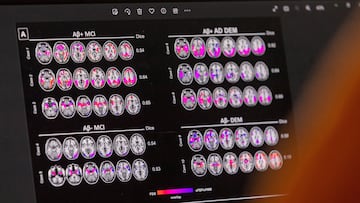
For nearly a decade, the mother of neurosurgeon Sun Bomin lived with very advanced Alzheimer’s disease. In her nineties, the illness had erased her memory and her sense of time. Her son describes that period as one of complete silence and disconnection.
In 2024, Sun, director of the Functional Neurosurgery Center at Ruijin Hospital in Shanghai, decided to operate on his own mother, though not with the goal of treating Alzheimer’s. The procedure was intended to relieve a physical dystonia that caused involuntary muscle contractions. However, after she underwent high-intensity focused ultrasound treatment, an unexpected effect occurred. Her cognitive abilities began to return.
Following the procedure, the patient once again recognized her family members, expressed emotions and needs, and was able to perform mental tasks such as simple calculations. These results prompted Sun to launch a clinical trial involving seven people. Two patients showed rapid improvement, while the remaining participants experienced an average recovery of 50 percent.
A technology without open surgery
The method used relies on a system that Sun himself calls a magnetic wave knife. It works by emitting multiple ultrasound waves from different angles that pass through the brain without causing damage. The waves converge at a specific point, where their combined energy makes it possible to act on tissue without opening the skull.
Despite the significant effects observed in some cases, the researchers remain cautious. Sun acknowledges that the precise changes occurring in the brain after treatment are still unknown. He also notes that in two patients with severe disease, the improvements gradually faded over time. Even so, the finding opens a potential new avenue of research for a disease that has long been considered incurable.
Related stories
Get your game on! Whether you’re into NFL touchdowns, NBA buzzer-beaters, world-class soccer goals, or MLB home runs, our app has it all.
Dive into live coverage, expert insights, breaking news, exclusive videos, and more – plus, stay updated on the latest in current affairs and entertainment. Download now for all-access coverage, right at your fingertips – anytime, anywhere.
Complete your personal details to comment