


Russian scientists revive a 32,000-year-old extinct plant with seeds found in Siberian permafrost
The experts discovered the seeds in an Arctic ground squirrel burrow. After unsuccessful attempts to germinate them, they finally opted for a different approach.
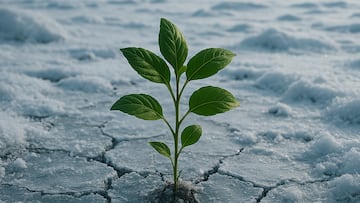

Science is advancing in every direction. And something that once seemed impossible—bringing an organism back to life—is now becoming reality. That’s exactly what happened in Russia, where a team of scientists successfully revived a plant species that had been extinct for 32,000 years. This breakthrough was made possible thanks to seeds preserved in the Siberian permafrost.
The plant, Silene stenophylla, a narrow-leafed species, now holds the title of the oldest living organism ever regenerated from plant tissue. But the journey to this achievement wasn’t easy. Back in 2007, researchers discovered the seeds in the most unexpected place: inside an ancient burrow of an arctic squirrel.
Buried 38 meters deep along the Kolyma River, the burrow contained seeds and nuts that had been frozen in Pleistocene ice for thousands of years. Radiocarbon dating revealed their age—31,800 years—far surpassing the previous record held by a 2,000-year-old date palm seed found in Israel. The findings were published in Proceedings of the National Academy of Sciences.
Reviving the plant wasn’t straightforward. After failed attempts to germinate the seeds directly, scientists turned to an alternative method: extracting placental tissue from immature fruits and cultivating it in vitro. This approach led to the successful cloning of 36 identical plants.
A glimpse into the past
Related stories
The results were remarkable. The plants produced healthy white flowers, were fertile, and achieved a 100% germination rate from the seeds they generated. However, there was one striking difference compared to modern Silene stenophylla: the ancient plants had longer, more spacious petals. This suggests the existence of an Ice Age phenotype that may have survived in the permafrost but has since disappeared through modern evolution. While the exact reason for this difference remains uncertain, researchers believe it could be an adaptation to the extreme conditions of the era—or a lost evolutionary trait.
Get your game on! Whether you’re into NFL touchdowns, NBA buzzer-beaters, world-class soccer goals, or MLB home runs, our app has it all. Dive into live coverage, expert insights, breaking news, exclusive videos, and more – plus, stay updated on the latest in current affairs and entertainment. Download now for all-access coverage, right at your fingertips – anytime, anywhere.
Complete your personal details to comment