


Scientists alarmed by dramatic changes in the ocean near Japan: “I don’t even know if ‘surprised’ is the right word”
Warming seas and shifting currents are disrupting fisheries, ecosystems and centuries-old food traditions across Japan’s coastline.
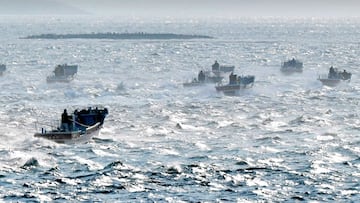
Rising sea levels and unusual shifts in major ocean currents are fueling concern among researchers who monitor Japan’s coastlines. Scientists warn that global warming is disrupting marine systems long thought to be stable, triggering direct impacts on ecosystems, coastal infrastructure and the country’s food traditions.
How the Kuroshio Current is behaving differently
One of the most troubling developments involves changes to the Kuroshio Current, one of the Pacific Ocean’s most powerful and influential currents. Its recent shift has raised sea levels in parts of Japan’s coastline and altered water temperatures, setting off a chain reaction that affects marine life throughout the region.
“I was so surprised that I don’t even know if ‘surprised’ is the right word,” Shusaku Sugimoto, an associate professor at Tohoku University in Sendai, told CNN. According to Sugimoto, the northern edge of the Kuroshio moved roughly 300 miles farther north than usual, bringing unprecedented warm waters to the region.
Sugimoto led a study examining ocean temperatures off Japan’s northeastern coast. He said water temperatures off the Sanriku coast rose by about 11 degrees Fahrenheit and remained elevated for two straight years, an increase never before recorded in that area.
Fishing communities feel the impact first
The effects of these changes are already being felt in Japan’s fishing industry. Fishermen across multiple regions report that once-abundant species are moving into colder or deeper waters, while unfamiliar species are increasingly turning up in their nets. The shift has led to sharp declines in catches of key commercial fish, threatening the economic survival of many coastal communities.
Beyond the immediate financial impact, scientists warn of a deeper transformation of the marine ecosystem. Warmer waters disrupt fish breeding cycles, alter food availability and upset the balance between species, making it harder to predict what Japan’s fisheries will look like in the coming years. In a country where seafood is central to both daily life and national identity, the implications are profound.
Iconic Japanese foods and traditions under threat
Rising ocean temperatures are not only affecting fish such as Pacific salmon and saury. They are also endangering kombu, a type of seaweed that is foundational to Japanese cuisine. Kombu can only be harvested in Hokkaido, Japan’s northernmost main island, and stocks have declined sharply in recent years.
Scientists warn that continued losses could undermine the tradition of dashi, the broth that forms the base of countless Japanese dishes. For many, the decline of kombu represents not just an environmental crisis, but a cultural one.
Extreme oceans linked to extreme weather on land
Researchers say these ocean changes also help explain a growing number of extreme coastal and weather events. Japan’s Meteorological Agency has found that unusually warm ocean conditions contributed to record-breaking summer heat across northern Japan in 2023.
Another team of scientists linked the warm ocean current to extreme rainfall in Chiba, near Tokyo, in September 2023. Together, the findings highlight how rapidly changing seas are reshaping both marine environments and life on land, often in ways scientists are still struggling to fully understand.
Related stories
Get your game on! Whether you’re into NFL touchdowns, NBA buzzer-beaters, world-class soccer goals, or MLB home runs, our app has it all.
Dive into live coverage, expert insights, breaking news, exclusive videos, and more – plus, stay updated on the latest in current affairs and entertainment. Download now for all-access coverage, right at your fingertips – anytime, anywhere.
Complete your personal details to comment