


Scientists claim ancient Egyptian healers removed cancerous tumors from a patient’s head more than 4,000 years ago
Spanish archaeologist Edgard Camarós analyzed ancient remains, which showed signs of possible medical intervention.
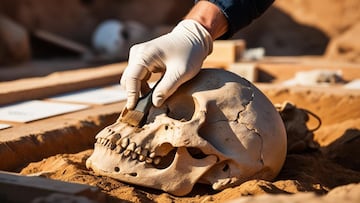
Surgical procedures in the various guises have been around for thousands of years - the most primitive operations, amputation of limbs, were believed to have been performed 31,000 years ago. But could our ancestors have also used surgery to cure other conditions such as cancer?
Modern day surgery using anesthesia didn’t begin until the mid-1800s. Before that, interventions were excruciatingly painful - and dangerous, many patients died on the operating table.
Spanish paleopathologist Edgard Camarós, a Ramón y Cajal researcher at the University of Santiago de Compostela recently analyzed ancient remains, which showed signs of possible medical intervention dating back 4,000 years.
4,000-year old skull reveals evidence of possible cancer treatment
In his study published last year in Frontiers in Medicine, Dr. Camarós examined two ancient Egyptian skulls housed in the Duckworth Collection at the University of Cambridge. His findings uncovered what may be some of the earliest evidence of cancer treatment in human history.
One skull belonged to a woman in her 50s, dating between 663 and 343 BCE, who suffered from a large cancerous tumor that caused significant bone destruction. Remarkably, her skull also showed signs of healed traumatic injuries, suggesting she survived violent encounters during her lifetime.
The second skull, from an adult male aged 30 to 35 who lived between 2687 and 2345 BCE, revealed something even more astonishing: incision marks around a tumor, likely made with a sharp metal instrument. These cut marks suggest that ancient Egyptian practitioners may have attempted a surgical intervention—either to remove or drain the tumor, or possibly as part of a postmortem examination.
“This is the first documented case of a surgical procedure directly linked to a tumor in ancient history. Yet, we’ve long known, from Egyptian medical papyri dating back over 3,600 years, that ancient physicians were able to identify tumors. One notable example involves a case of breast cancer described in the Edwin Smith Papyrus, widely considered the oldest known surgical text,“ Dr. Camarós explained.
The study has been peer-reviewed with some professionals pointing out that it is extremely difficult to make an accurate diagnosis regarding chronic illnesses in patients who died more than 2,000 years ago. But from the little when have gleaned about ancient medicine, it appears that Egyptian physicians were in agreement about one thing - that there is no definitive cure for cancer.
Related stories
Get your game on! Whether you’re into NFL touchdowns, NBA buzzer-beaters, world-class soccer goals, or MLB home runs, our app has it all.
Dive into live coverage, expert insights, breaking news, exclusive videos, and more – plus, stay updated on the latest in current affairs and entertainment. Download now for all-access coverage, right at your fingertips – anytime, anywhere.
Complete your personal details to comment