


Scientists express concern about the ocean’s behavior: “I don’t even know if ‘surprised’ is the right word”
The ocean surrounding Japan is changing at a rate that baffles experts, with consequences affecting local fishing and culture.
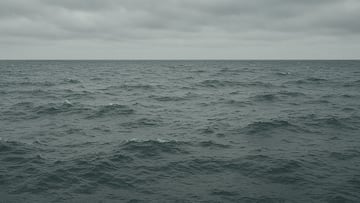
The rise in sea levels and the abnormal behavior of ocean currents are raising alarm among scientists studying Japan’s coastlines. Researchers warn that global warming is disrupting marine dynamics once considered stable for decades, triggering direct impacts on ecosystems, infrastructure, and even the country’s culinary traditions.
One of the most concerning developments is the changing behavior of the Kuroshio Current, one of the Pacific’s major currents. Its shift has raised sea levels along parts of Japan’s coastline and altered water temperatures, setting off a chain reaction affecting marine biodiversity
“I was so surprised I don’t even know if ‘surprised’ is the right word,” Shusaku Sugimoto, an associate professor at Tohoku University in Sendai, Japan, said in an interview with CNN. The northernmost edge of the Kuroshio has shifted as much as 480 kilometers toward the pole, creating unprecedented warm-water conditions in the region.
Sugimoto led a study analyzing ocean temperatures off the coast. “The fact that the temperature rose 6 degrees (Celsius) off the Sanriku coast, and the elevated temperature persisted for two years, represents a level of water temperature rise we’ve never seen before,” he told CNN.
Fishing at the center of the climate impact
These changes are already being felt in Japan’s fishing industry. Fishermen in various regions say species that were once abundant are now migrating to cooler or deeper waters, while other, less familiar species are appearing in their nets. This imbalance has led to significant declines in key fish stocks that support the local economy, putting the viability of many coastal communities at risk.
Beyond the economic fallout, scientists warn of a deeper transformation in the marine ecosystem. Rising sea temperatures are affecting fish reproduction cycles, food availability, and the balance between species, making it harder to predict how fisheries will evolve in the coming years. For a country where fish consumption is central to both diet and culture, the implications are profound.
The temperature shift doesn’t just affect fish species such as Pacific salmon and Pacific saury; it’s also disrupting the harvest of one of the pillars of Japanese gastronomy: kombu seaweed. This type of seaweed can only be harvested in Hokkaido, Japan’s northernmost island. Kombu stocks are dropping dramatically, threatening to destabilize the culture of dashi, the classic Japanese soup stock.
Climate change is also helping explain a series of increasingly frequent coastal phenomena. Japan’s Meteorological Agency found that extreme ocean conditions contributed to the record-breaking land temperatures in northern Japan during the summer of 2023. Meanwhile, another group of scientists linked the warm ocean current to the extreme rainfall that hit Chiba, near Tokyo, in September 2023.
Related stories


Get your game on! Whether you’re into NFL touchdowns, NBA buzzer-beaters, world-class soccer goals, or MLB home runs, our app has it all.
Dive into live coverage, expert insights, breaking news, exclusive videos, and more – plus, stay updated on the latest in current affairs and entertainment. Download now for all-access coverage, right at your fingertips – anytime, anywhere.
Complete your personal details to comment