


Scientists in Switzerland have created nanorobots the size of a grain of sand that could revolutionize medicine: “We are just at the tip of the iceberg”
Researchers at ETH Zürich say they have developed new technology that could revolutionize the delivery of drugs.
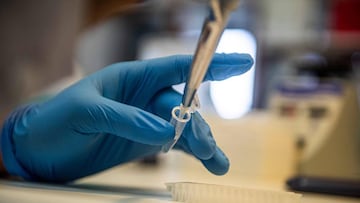

Researchers at a Swiss university have developed a tiny robot they say can carry drugs to a specific part of the human body - a scientific advancement that could help reduce the side effects of medication.
“Microrobots to deliver pharmaceuticals to where they need to be”
In findings published in the journal Science this month, a team from ETH Zürich unveiled their “microrobotic drug delivery platform”, which consists of spherical capsules that can be steered through the body using magnets.
Capable of “precise navigation under physiological conditions”, the miniscule capsules are made of a gel that dissolves when they arrive at their destination in the body. This then releases the drug the microrobot has been carrying.
“Since medicines are often only needed in specific areas of the body, medical research has long been searching for a way to use microrobots to deliver pharmaceuticals to where they need to be,” ETH Zürich said in a press release.
“Serious side effects”
ETH cited the example of how the new technology could improve the delivery of anti-blood-clot medication given to stroke patients, avoiding the potentially damaging side effects of “off-target” application.
“Currently, drugs are administered to dissolve the thrombus that blocks the blood vessel,” the university said. “These drugs spread throughout the entire body, meaning a high dose must be administered to ensure that the necessary amount reaches the thrombus.
“This can cause serious side effects, such as internal bleeding.”
Led by Fabian Landers, a postdoctoral researcher at ETH’s Multi-Scale Robotics Lab, the team of scientists has successfully tested the technology on pigs and sheep, as well as “realistic [human] vessel models”.
“The tip of the iceberg”
In its news release, ETH said the new technology could, in addition to revolutionizing treatment for strokes, be used to treat infections and tumors. Its team of researchers aims to begin human clinical trials “as soon as possible”.
“Doctors are already doing an incredible job in hospitals,” said Professor Bradley Nelson, who was also part of the ETH team. “What drives us is the knowledge that we have a technology that enables us to help patients faster and more effectively and to give them new hope through innovative therapies.”
Speaking to the Washington Post, Nelson added: “We’re just at the tip of the iceberg. I think surgeons are going to look at this. I’m sure they’re going to have a lot of ideas on how to use [the microrobots].”
Related stories


Get your game on! Whether you’re into NFL touchdowns, NBA buzzer-beaters, world-class soccer goals, or MLB home runs, our app has it all.
Dive into live coverage, expert insights, breaking news, exclusive videos, and more – plus, stay updated on the latest in current affairs and entertainment. Download now for all-access coverage, right at your fingertips – anytime, anywhere.
Complete your personal details to comment