


Scientists sound the alarm over never-before-seen ocean event near the Panama Canal
An annual phenomenon that has helped deliver cold, nutrient-rich waters from the ocean depths failed to occur for the first time causing concern.
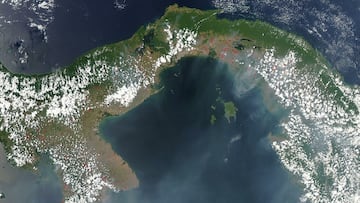

Since records have been kept, every year cold, nutrient-rich waters have surged from the depths of the Pacific Ocean into the Gulf of Panama. This ‘upwell’ helps to sustain the fishery in the area and cool the waters, not only preventing coral bleaching but also keeping them cooler for summer vacationers.
However, in 2025 this vital oceanographic process did not occur for the first time that scientists are aware of. The failure of this phenomenon to appear has scientists alarmed and searching for what caused the unprecedented event.
What caused the failure of the Gulf of Panama upswell?
The seasonal upwelling in the Gulf of Panama has been occurring consistently and predictably from January to April for at least the past 40 years, when scientists began to keep records. This coincides with the dry season in Central America during which the northern trade winds blow over the Panama Isthmus that drive the upwelling.
However, this year the wind didn’t blow “as frequently or as strongly as normal years,” said Aaron O’Dea of the Smithsonian Institution’s Tropical Research Institute, which carried out a study into the absence of the upwell.
He told USA TODAY that this reduction in the winds is “the prime suspect” behind the upwell failure. However, he added: “The more important question is, why did the winds not blow?”
The researchers reckon that abatement of the northern trade winds possibly had something to do with the position of the Intertropical Convergence Zone during the 2024–2025 La Niña. However, O’Dea admitted “we currently do not know why and deciphering this will take a little more time.”
🐟 Upwelling failure: For the first time in 40 years, the cold, nutrient-rich waters of the Gulf of #Panama failed to emerge. Why did this happen, and what does this mean for the future of fisheries?
— Smithsonian Panama (@stri_panama) September 3, 2025
Read the full story: https://t.co/lEo7H2pboM#STRI #Smithsonian #Science pic.twitter.com/Jlc5glBFEm
Smithsonian collaborating with Max Planck Institute
The research team pointed out in their paper that “this event underscores how climate disruption can threaten wind-driven tropical upwelling systems, which remain poorly monitored and studied despite their importance to ecology and coastal economies.”
There findings marked one of first major outcome of STRI’s collaboration with the Max Planck Institute. O’Dea told USA TODAY that together they plan to “more rigorously” analyze atmospheric and ocean data.
They will then apply high-resolution modelling in order to “better understand what happened and why, and predict if it will happen again.”
Related stories


Get your game on! Whether you’re into NFL touchdowns, NBA buzzer-beaters, world-class soccer goals, or MLB home runs, our app has it all.
Dive into live coverage, expert insights, breaking news, exclusive videos, and more – plus, stay updated on the latest in current affairs and entertainment. Download now for all-access coverage, right at your fingertips – anytime, anywhere.
Complete your personal details to comment