


Six Nobel-winning economists slam Trump’s one big beautiful bill: They warn “millions of American families will lose key safety net protections”
Six Nobel prize winners in economics are urging the US Senate to scrap the House GOP spending bill, warning that it will increase economic inequality by cutting vital programs to fund tax cuts for the rich
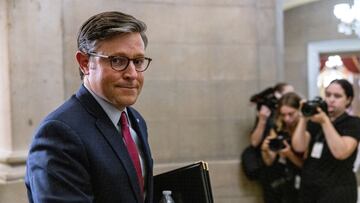

A strange oppositional force has emerged against President Trump’s ‘one big beautiful bill,’ passed by the House of Representatives along party lines last week.
Billionaire Elon Musk, who left his leading role within the Trump administration last Friday, has come out strongly against the package, calling it a “disgusting abomination.” Musk is frustrated with the massive increases in spending and tax cuts that will further grow the deficit and the national debt.
The CEO of Tesla, X, Space X, and the Borning COmpany has been less vocal about the tax cuts included in the bill, which are one of the main reasons the package is expected to grow the deficit, and instead has attacked the high levels of new spending on the military and border security included in the bill.
However, before Musk took to X to begin his tirade against the bill, six Nobel laureates in economics published a joint letter through the Economic Policy Institute, which contained a grave warning about the legislative package under consideration. The work of the six economists addresses, to some extent, market failures, institutional inefficiencies, and the role of policy in addressing inequality.
A new spending bill should be drafted that doesn’t massively grow the deficit and increase the debt ceiling by 5 TRILLION DOLLARS
— Elon Musk (@elonmusk) June 4, 2025
The three critiques found within the letter
The critique expressed in the letter is threefold. The first argument focuses on cuts to Medicare, which the group describes as “a sad step backward in the nation’s commitment to providing access to health care for all.” They noted that although the GOP intends to increase the number of able-bodied adults enrolled in the program, these are “not heavy consumers of health spending.” Additionally, the authors draw attention to the high levels of spending on low-income retirees and the high number of births that Medicare covers. For these groups, the imposition of work requirements will also not lead to savings. Lastly, regarding Medicaid, economists draw attention to how cuts to the program could further threaten rural hospitals, particularly in states that did not expand the program under the Affordable Care Act.
In addition to cuts to Medicaid, the economists also expressed concern over further funding cuts to SNAP, the Supplemental Nutrition Assistance Program, formerly known as food stamps.
The second set of arguments focused on income equality and fears that this legislation, which would likely widen the gap between the rich and the poor, would exacerbate the issue. “These steep cuts to the social safety net are being undertaken to defray the staggering cost of the tax cuts included in the House bill, including the hidden cost of preserving the large corporate income tax cut passed in the 2017 tax law,” explained the Nobel laureates. The tax cuts, which the authors say are “overwhelmingly tilted toward the highest-income households," mean that those with the highest income will benefit, while those with the lowest could see their access to healthcare and food assistance cut.
Lastly, similar to Musk, the group did focus on the ways in which the bill would further increase the national debt, as “real debt service payments [are] approaching their historic highs in the past year.” The cuts made to Medicaid and SNAP are insufficient to prevent a projected $3 trillion increase in debt over the next few years. The economists warn that further destabilizing the economy by creating higher deficits could lead to “upward pressure on both inflation and interest rates in the coming years.” Again, higher prices and higher interest rates, which indicate greater difficulty obtaining credit, will disproportionately harm working-class families.
Bringing these arguments together, the authors conclude that the bill “constitutes an extremely large upward redistribution of income.”
The future of the bill
The letter aimed to warn Congressional leaders, and to a certain extent the White House, to proceed with caution. The authors make an argument that even a few Democrats have articulated coherently: tax cuts increase the deficit at a time when many of the “pressing economic challenges” the US faces will “require a greater level of state capacity.” Speaker of the House Mike Johnson has argued on numerous occasions that the bill will serve as an engine for economic growth, enabling the deficit to shrink as people have more money in their pockets and the labor market flourishes. With historically low unemployment, the speaker overlooks the possibility that it might not be the availability of work, but the pay, that hampers upward economic mobility.
The call of the Nobel Prize winners is similar to that of Elon Musk. The Senate should reject the bill and send it back to the House to be redrafted.
Related stories


As of early June, it is clear that Republicans in the Senate do not have the votes necessary to pass the bill. The Republican holdouts agree with the third argument in the letter that the legislation further grows the deficit and debt, and therefore cannot be enacted. However, some would like to see further reductions in Medicaid and SNAP spending.
Get your game on! Whether you’re into NFL touchdowns, NBA buzzer-beaters, world-class soccer goals, or MLB home runs, our app has it all. Dive into live coverage, expert insights, breaking news, exclusive videos, and more – plus, stay updated on the latest in current affairs and entertainment. Download now for all-access coverage, right at your fingertips – anytime, anywhere.
Complete your personal details to comment