


Swiss architects unveil living buildings that feed on CO₂: combining 3D printing and ancient marine bacteria
Ethical dilemmas arise regarding the extent to which it is acceptable to intervene in the creation and modification of living organisms.
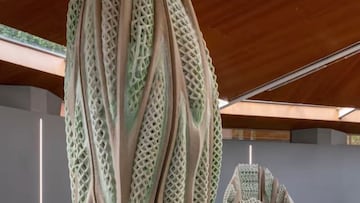

Fumerini, a TikTok user, has commented in a video on the development of living buildings capable of absorbing CO₂. This project, called Picoplanktonics, was presented at the 2025 Venice Biennale. The initiative was created by a group of scientists from ETH Zurich and consists of 3D-printed structures cultivated with ancient marine cyanobacteria.
These living microorganisms are integrated into the material itself and are responsible for capturing CO₂ from the air and transforming it into minerals and living biomass.
In addition, these bacteria are able to grow, change, and adapt over time, behaving like living organisms. To survive, they require specific conditions such as light, water, and nutrients, which is why trained professionals were responsible for their maintenance during the exhibition in Venice.
Up to 18 Kilograms of CO₂ per Year
Each of these structures can absorb up to 18 kilograms of CO₂ per year, an amount equivalent to what a pine tree captures over a period of 20 years.
According to the TikTok creator, the project succeeds in “bringing together ancestral biology and futuristic technology,” creating an architecture that works with nature rather than imposing itself on it.
@fumerini Son edificios vivos que respiran y comen CO₂. Se llama Picoplanktonics y es una obra de arte. En la Bienal de Venecia 2025 se presentó este proyecto de arquitectos y científicos de la ETH Zurich que combina impresión 3D con cianobacterias marinas ancestrales. Estas estructuras están vivas y se alimentan del CO₂ del aire, y lo transforman en minerales y biomasa. Y como se puedo ver en la bienal crecen, se adaptan y necesitan cuidados como luz, agua y nutrientes. Y más allá de la tecnología, esta obra nos plantea una pregunta incómoda: si ya podemos cultivar arquitectura, ¿hasta dónde llega la ética de diseñar organismos? ¿Estamos construyendo sostenibilidad… o cruzando una nueva frontera donde la arquitectura ya no se fabrica, sino que nace?
♬ sonido original - Pedro Fumero
However, the creator also raises ethical questions, asking to what extent it is appropriate to create living organisms designed by humans.
Related stories
Get your game on! Whether you’re into NFL touchdowns, NBA buzzer-beaters, world-class soccer goals, or MLB home runs, our app has it all.
Dive into live coverage, expert insights, breaking news, exclusive videos, and more – plus, stay updated on the latest in current affairs and entertainment. Download now for all-access coverage, right at your fingertips – anytime, anywhere.
Complete your personal details to comment