


The jewelry trend that captured the imagination of the world in 1975 making its creators millionaires
In 1975, two men with no relation to one another had the outlook: to create a color-changing ring to delight the masses.
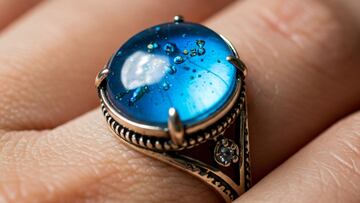
‘Mood rings’ became incredibly popular in the 1970s for a number of reasons as many people held a fascination with self-discovery and inner feelings at the time.
When first introduced by Joshua Reynolds and Maris Ambats in 1975, the rings were marketed as a “real biofeedback tool” that could help people understand their bodies and “mellow out.” This, combined with significant PR, led to a rapid explosion in sales. The rings were even sold in upscale department stores like Bonwit Teller in New York City, creating a sense of luxury and desirability despite the relatively simple technology.
Who had a Mood ring back in the 1970s pic.twitter.com/JJKAqKLhvM
— TJ. (@Tjeerd001) March 19, 2024
The 1970s saw a increased focus on personal growth, wellness, and understanding one’s own emotions. Activities like jogging, yoga, and meditation gained popularity, and people were increasingly interested in “analyzing yourself, asking, ‘Who am I? What are my feelings?’” Mood rings perfectly capitalized on this trend by seemingly offering a visible, tangible way to track one’s inner state.
How did the mood ring work?
The “stone” of the mood ring wasn’t a gemstone, but typically a hollow glass or quartz shell filled with a special type of liquid crystal. These crystals are unique because their molecular structure changes in response to temperature fluctuations.
The liquid crystals were designed to twist or change their orientation when their temperature changes and this change in reflected light is what we perceive as a change in color.
The idea behind mood rings was that a person’s body temperature, particularly their peripheral body temperature (like in their fingers), would change slightly with their emotional state.
An accompanying “Mood Chart” came with each ring and this chart helped correlate specific colors to different moods (e.g., blue for calm, green for neutral, black for stressed).
Mood ring
— Scott Verity (@ScottVerity) May 5, 2025
circa 1970s
See chart below: pic.twitter.com/F3L8XMpXD5
Fading fad
Despite the marketing that accompanied the rings, a mood rings didn’t truly “read” emotions. They simply responded to body temperature, which could be influenced by anything from stress to simply being too warm or cold. This lack of precise emotional reading eventually became apparent to many.
Joshua Reynolds and Maris Ambats experienced significant initial success and saw their rings reach millions of dollars in sales.
Related stories
Get your game on! Whether you’re into NFL touchdowns, NBA buzzer-beaters, world-class soccer goals, or MLB home runs, our app has it all.
Dive into live coverage, expert insights, breaking news, exclusive videos, and more – plus, stay updated on the latest in current affairs and entertainment. Download now for all-access coverage, right at your fingertips – anytime, anywhere.
Complete your personal details to comment