


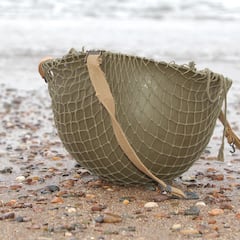
This was the largest evacuation in history and it was not at Dunkirk but much more recently in the heart of the United States
Hundreds of boats responded to a distress call in a spontaneous act of courage to rescue half a million people trapped in Manhattan.


On September 11, 2001, Manhattan descended into chaos. At 8:46 a.m., the North Tower of the World Trade Center was struck by an airplane. TV networks around the world switched to live coverage. Seventeen minutes later, at 9:03 a.m., a second plane slammed into the South Tower. There was no longer any doubt—New York was under attack.
Panic gripped the city. Everyone’s instinct was to flee. But the subway system in Lower Manhattan shut down after the second impact, and by 9:21 a.m., all tunnels and most bridges connecting Manhattan to the mainland were closed. Only the Brooklyn, Manhattan, and Williamsburg bridges remained partially open to pedestrians. The closures aimed to prevent further attacks, secure key infrastructure, and keep access open for emergency responders—but they also sealed the island off, trapping hundreds of thousands of workers and residents in Lower Manhattan with no clear escape and an open sky above them.
A crowd at the piers
At 9:59, the South Tower of the World Trade Center collapsed, and 29 minutes later, the North Tower fell. A toxic cloud of debris, metal, and ash engulfed the southern part of the island, turning it into an apocalyptic scene where nothing could be seen, breathing was nearly impossible, and ghost-like figures emerged constantly—shocked and covered in dust. What had started as a trickle of people became a crowd gathering at the piers, pleading for help.
Initially, the Port of New York was closed, but the Coast Guard realized that a large crowd was forming at Battery Park and other shoreline areas. They immediately began evacuating people but were quickly overwhelmed. In the state of panic the crowd was in, they either needed more help and better organization, or another tragedy could unfold. Some people were jumping into the water, trying to climb onto any vessel just to get away. It was urgent to convey calm to prevent the situation from spiraling out of control.

A legendary call
Then, Lieutenant Michael Day of the Coast Guard, aboard the 100-foot pilot boat New York, broadcast a legendary emergency call over the radio that sparked a miracle and the largest evacuation in a single day in history: “To all available boats, this is the United States Coast Guard... anyone who wants to help with the evacuation of Lower Manhattan, report to Governor’s Island.”
As if by magic, vessels began appearing from everywhere. Ferries, tugboats, tour boats, private vessels, small motorboats—even cargo ships. It’s estimated that around 150 vessels and about 600 mariners responded to the call. From the famous Staten Island Ferry, capable of carrying up to 6,000 people per trip, to small inflatable boats with room for just two or three passengers.
A great ballet on the Hudson
Some of those who were there say they had never seen so many boats together on the Hudson River. All of them moved as if in a huge ballet, ferrying people back and forth across the river without a single serious incident throughout the entire day. There were no major collisions between vessels, despite the improvised traffic and the fact that boats had to communicate using signals due to radio congestion. Very early on, sheets or any available surface on each boat were used to display their destination, and on the return trip to Manhattan, they brought supplies and emergency workers.
Many of the mariners who took part in that day—which lasted more than nine hours and rescued between 270,000 and 500,000 people—say that when they heard the distress call, “we didn’t know if we were coming back. But we knew we had to go.” The general feeling was that Manhattan was under attack, and no one knew what they would find there: “We didn’t know if there would be another attack. But no one hesitated. We all wanted to help.” Many of those volunteers later suffered from post-traumatic stress or felt guilty: “I should have done more.”
For years, this spontaneous operation went largely unnoticed, even though, according to Coast Guard Commander James Loy, the evacuation of 500,000 people in nine hours was even greater than the 338,000 soldiers rescued at Dunkirk over nine days in 1940. Ten years after the attacks, a 12-minute documentary titled BOATLIFT – An Untold Tale of 9/11 Resilience, narrated by Tom Hanks, was released, revealing the scale of the rescue and the bravery of the people behind one of the greatest civilian feats in history.
Related stories

Get your game on! Whether you’re into NFL touchdowns, NBA buzzer-beaters, world-class soccer goals, or MLB home runs, our app has it all.
Dive into live coverage, expert insights, breaking news, exclusive videos, and more – plus, stay updated on the latest in current affairs and entertainment. Download now for all-access coverage, right at your fingertips – anytime, anywhere.
Complete your personal details to comment